BY ZOLA PINDA:
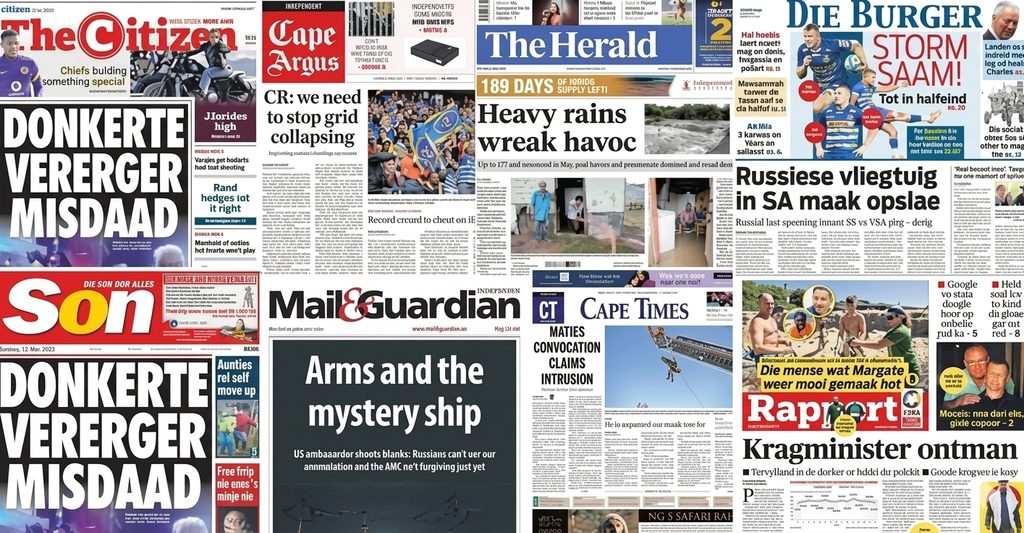
South Africa’s media should periodically ask not whether journalists can write, but what intellectual formation should underpin journalism in a constitutional democracy.
A competent journalist can interview, write to deadline and produce readable copy. That craft is indispensable. Yet journalism at its highest level asks more: why does this story matter, what structures produced it, who has power, whose voice is absent, what does law require, and what does the citizen need to know?
That is where craft meets discipline. South Africa needs not more information, but better understanding.
The commercial newsroom teaches urgency, news sense and verification under pressure. It is essential. But it cannot answer every question. Why does one story lead while another disappears? Why are some communities visible only when something fails? Why does conflict eclipse implementation?
These are questions of power, political economy and accountability. The journalist needs an intellectual framework, not only technical skill.
Scholarship offers a parallel discipline. The scholar poses a problem, engages existing knowledge, gathers evidence and submits conclusions to scrutiny. The test is not persuasiveness but whether evidence supports the claim. Journalism must be fast and accessible, yet the principle holds: how do I know this, what is missing, what would change my conclusion? The academic survives peer scrutiny; the journalist survives factual scrutiny.
Rhodes University’s School of Journalism and Media Studies, in the Africa Media Matrix, has long combined practice with inquiry into media, society, democracy and power. Craft teaches how to tell the story. Discipline teaches how to understand the world behind it. South Africa needs both.
The link between scholarship and place illustrates this. Dr Cecil Wele Manona, raised near Peddie, became a Rhodes anthropologist whose work on land, education, migration and family life in the Eastern Cape took communities seriously as places where history and economics meet lived experience.
Siyabulela Sobantu Manona continues that inquiry in a different moment. Having studied at Rhodes, Fort Hare and the Western Cape, his doctoral research examined open government data and land administration in post-apartheid South Africa. Land is never simply land; it is history, ownership, livelihoods and power, and whether democratic institutions have transformed inherited systems. Questions from communities travel across generations and are reformulated.
This matters acutely in the Eastern Cape, rich in history yet burdened by uneven development. Serious journalism must move from symptom to system. When a road collapses, investigate governance. When a clinic lacks capacity, investigate procurement and budgets. When a municipality fails, investigate the institutional chain. The pothole is visible. The failure behind it is the journalism.
Consider a familiar scene: a politician arrives in a rural village, cameras rolling, speeches and promises. The story is filed and the convoy leaves. Real accountability begins the next week. Was the budget available? Who was responsible? What changed after cameras left? The journalist need not insult the politician. Evidence is more powerful.
None of this is hostility to commercial media, which operates within real constraints. The danger is allowing commercial imperatives to become the sole measure of value. If consequence is displaced by what performs best, the citizen becomes a consumer and public interest becomes audience interest.
The citizen – not politician, advertiser or algorithm – must sit at the centre. A citizen who understands law is harder to manipulate. One who understands public finance can interrogate government. One who understands institutions can locate responsibility.
There is a case for publishing less and thinking more. Not every statement deserves amplification. Sometimes responsibility means waiting, reading documents, returning to the community and asking again. Value should be measured by useful understandings, not volume.
Citizen-centred journalism might rest on five principles: citizen before consumer; evidence before rhetoric; explanation before condemnation; fairness without false equivalence; and education before volume.
Alternative media must earn its status not by opposing mainstream media, but by adding what is missing: spending longer with issues, openness to researchers and community voices, and following stories after the national cycle moves on.
That is where Africa Heritage News Network finds purpose: communities deserve media that takes their intelligence, history and constitutional rights seriously.
We began with a woman behind a theatre curtain. She is the reader. The stage is what journalism shows us. Behind it are budgets, laws, histories and editorial choices. Serious readers must look beyond performance, and serious journalists must help them.
Knowledge that stays in the institution remains scholarship. Knowledge that enters public life becomes a democratic resource. The curtain is not the end. It is the invitation to look behind it, and to ask what kind of citizen our journalism is creating for our democracy today. If journalism makes power visible, its duty is making citizens capable of seeing, questioning and acting beyond performance itself today always.
Zola Pinda is Founder and Executive Chairman of Africa Heritage News Network. He holds a BA in Journalism from Rhodes University and an MA in Professional and Business Communication from La Salle University.
Follow us on our social media platforms below: