By Fumene George Tsibani:
1. The Purpose
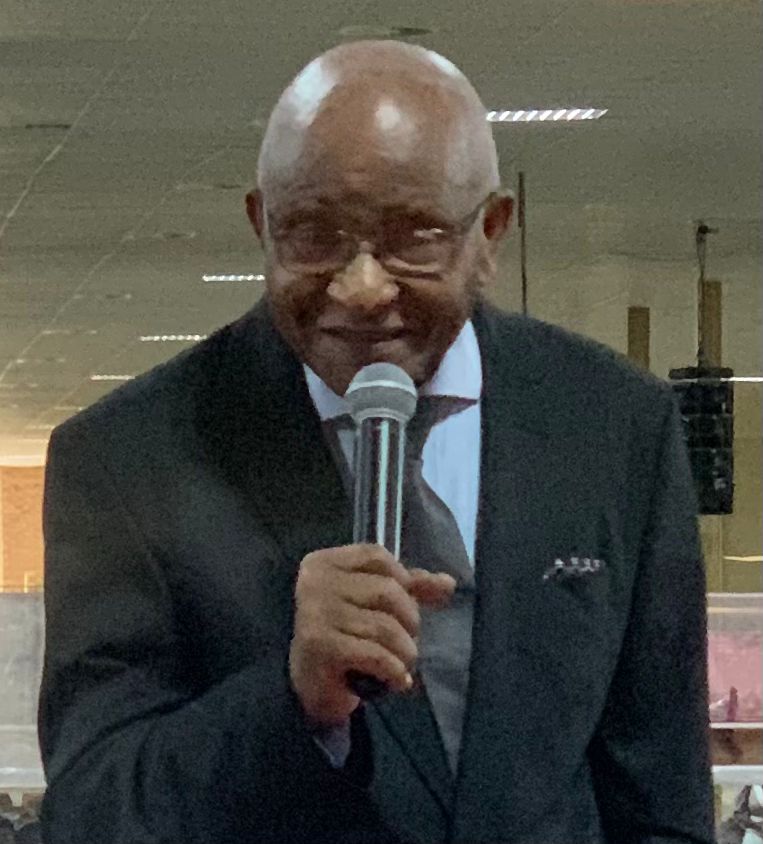
In a moment that seemed to lift the very heavens, the Thaba Nchu Centre of Excellence in Qwaqwa, east of Manguang, became the epicentre of a Holy Spirit’s earthquake. At the heart of the 80th anniversary celebration of the Assemblies of God Back to God (AOG‑BTG), marking the journey from 1945 to 2025, stood Dr Daniel S. Billy Lephoko, a 96‑year‑old living legend, delivering the memorial lecture on the revered Reverend Nicholas Bhengu.
Lephoko’s voice, honed by decades of preaching and scholarly rigour, thundered through the packed hall, recounting Bhengu’s meteoric rise from a humble court interpreter to the “Black Billy Graham of Africa.” He reminded the throng that Bhengu’s Back toGod Crusade ignited a fire in 1950, spreading from Gqeberha across South Africa and into neighbouring nations, planting thousands of churches and birthing a self‑sustaining, socio‑economic model that still fuels the AOG‑BTG today .
2. Ivangeli Elakudala – song of the early 1930s
With dramatic flair, Lephoko painted the scene: the congregation’s eyes welled up like the waters of Galilee, the choir’s hymn “Ivangeli Elakudala Elasikhupha Ezonweni!” reverberated like a battle cry, and even the distant icon rose to dance, embodying the very “five‑fold” Gospel that anchors the AOG BTG movement: Saviour, Healer, Baptiser in the Holy Spirit, Soon‑Coming King, and the five‑fold ministry of apostles, prophets, evangelists, pastors, and teachers.
The lecture was not merely a nostalgic tribute; it was a clarion call, Dr Makgosi Sindane ( Former Learning and Development at DBSA) declares regarding the song by AOG BTG choir.
Equally, Dr Lephoko declared that the AOG‑BTG’s growth into the world’s largest Pentecostal denomination owes much to Bhengu’s aggressive foreign missions, Bible schools, and lay‑participation strategies for the Great Commission. He urged the new generation to seize the mantle, to keep the “Holy Spirit” alive in every corner of Southern Africa and beyond.
As the final “Amen” rang out, the delegates left Thaba Nchu with hearts ablaze, their spirits as charged as the day the crusade first thundered across SADC countries between 1945 and 2025.
History of the Assemblies of God
The historical and rich genesis of the Assemblies of God ( AOG) in the United States is often described as a moment illuminated by the Holy Spirit, a clear, boundless horizon where disparate Pentecostal streams converged under a shared vision of Holy Spirit‑empowered worship and mission. In 1914, amidst the fervour of the early‑twentieth‑century revival, leaders such as Eudorus N. Bell, J. Roswell Flower, and Daniel Warren Pendleton gathered at Hot Springs, Arkansas, to forge a cooperative fellowship that would become the Assemblies of God (USA).
Their aim was to provide doctrinal unity, indirectly enchoed in the lecture by Most Reverend Daniel S Billy Lephoko in his scholarly works in 2010 and 2018, credentialing, and a platform for evangelism, while preserving the spontaneity of the Holy Spirit’s gifts, tongues, prophecy, and healing that had marked the Azusa Street revival a decade earlier. The same Holy Spirit moved to Thaba Nchu after Most Reverend, Dr Lephoko was counselling the AOG BTG teaching team, executives, RCC leaders, mothers, daughters, single mothers and daughters, youth and Sunday School teachers.
Dr Lephoko reminded the delegates that the AOG movement’s theological foundation rests on the five‑fold ministry, which expands the classic “Four‑fold Gospel” to include the five Christ‑given offices: Jesus Christ as Saviour, Healer, Baptiser in the Holy Spirit, Soon‑Coming King, and the Holy Spirit‑empowered fivefold leadership of Sunday school teachers, deacons, elders, evangelists, pastors, and teachers. This expanded quintet mirrors the Biblical narrative of restoration, echoing passages such as Joel 2:28‑29 (“I will pour out my Spirit on all people…”) and Acts 2:17, which the early adherents claimed as prophetic validation for their experience. The “Holy Spirit” thus denotes not merely a theological concept but a dynamic, guiding presence, suggesting a movement unclouded by dogmatic rigidity yet anchored in scriptural truth under the campaign Africa Back to God.
3. Impact of the memorial lecture
Dr Lephoko’s 2025 memorial lecture on Reverend Nicholas Bhengu, delivered at Thaba Nchu on 25 December 2025, highlighted how the Assemblies of God grew into “the largest Pentecostal denomination in the world.” He emphasised that this global reach was forged through bold foreign‑mission initiatives, a widespread network of Bible schools, and a strong focus on lay participation, echoing historian Vinson Synan’s analysis (Synan, The Holiness‑Pentecostal Tradition, 1997).
Lephoko also noted that by the mid‑20th century, the fellowship had centralised its operations in Springfield, Missouri, USA, and launched the Pentecostal Evangel (now Enrichment), a key periodical that circulated testimonies, doctrinal essays, and worldwide news.
Nicholas Bhengu’s Back to God Crusade, launched in October 1950 in Duncan Village, KwaGompo under Buffalo City Metropolitan Municipality ( East London) in the Eastern Cape province in the Republic of South Africa, became the engine of this expansion. The crusade mobilised thousands, establishing a tent ministry that spread from Gqeberha across South Africa and into neighbouring countries, planting hundreds of churches and forming the backbone of the Assemblies of God Back to God (AOG‑BTG) movement.
Bhengu’s vision: “Jesus for Africa, Africa for Jesus, Cape to Cairo” combined spiritual renewal with education and socio‑economic empowerment, creating a self‑supporting, self‑propagating network that still thrives today , Lephoko declares.
In contemporary practice, the Assemblies of God (USA) continues to embody the Holy Spirit’s influence, balancing charismatic fervour with institutional structure. Its congregations range from mega -churches to intimate storefronts, united by a common confession: “We believe in the present‑day ministry of the Holy Spirit, expressed through Holy Spirit gifts and the fruit of the Holy Spirit.”
This confession, rooted in Scripture (1 Cor 12–14; Gal 5:22‑23), underscores the enduring relevance of the 1914 formation: a movement that seeks to keep the heavens open while walking firmly on earth. Similarly, Reverend Bhengu institutionalised the fruits and gifts of the Holy Spirit in various SADC countries and established local assemblies by providing capacity-building initiatives.
4. Africa Back to God!
We are praying! We are singing, Africa Back to God! (Garden of Eden). On 25 December 2025, the Thaba Nchu Centre of Excellence, founded by the South African evangelist Reverend Nicholas Bhengu (also known as “The Black Crusader”) hosted a memorial lecture in his honour, celebrating the 80‑year span from 1945 to 2025 of the Assemblies of God Back to God (AOG‑BTG) movement from 21-27 December 2025.
The event drew participants from across the Southern African Development Community (SADC), including delegates from South Africa, Botswana, Lesotho, eSwatini, Namibia, Zimbabwe, Zambia, Malawi, etc.
Dr Daniel S. Billy Lephoko, aged 96, delivered a Holy Spirit-moving address that linked Bhengu’s pioneering pilgrimage with the contemporary mission of the AOG‑BTG, underscoring the shared Pentecostal and Evangelical heritage that unites believers from Cape Town to Cairo. The gathering served as a vivid illustration of the Holy Spirit’s capacity to transcend borders, echoing the same Spirit‑filled momentum that sparked the 1914 American assembly and now reverberates through Southern Africa’s diverse faith communities. In this context, the choir was compelled to sing “ Evangeli Elakudala Lasisindisa Ezonweni!”
Having witnessed the scene at the Thaba Nchu Centre of Excellence, I can attest that the gathering resembled a living tapestry of faith, woven with threads of history, prophecy, and jubilant praise. After the 96‑year‑old Pastor Dr Daniel S. Billy Lephoko delivered his moving lecture on the legacy of Reverend Nicholas Bhengu, affectionately known as “the Black Crusader” by Lephoko (2018), the atmosphere was charged with a palpable sense of Divine Holy Spirit-led momentum.
The elderly preacher stood for more than fifty‑six minutes (56) without a sip of water, a testament to the Holy Spirit’s sustaining power, as if echoing the Psalmist’s declaration, “They shall not grow weary, nor will they stumble” (Isaiah 40:31). Delegates from across the SADC region including a High Court judge from eSwatini and representatives of various RRCs were visibly moved to tears, their hearts resonating with the choir’s transformation of Bhengu’s marching orders into a soaring hymn of evangelism.
As we were sitting, we were made to be glued to our seats by Dr Lephoko’s inspiring memorial lecture on Reverend Bhengu. In that Holy Spirit-charged instant, the air at Thaba Nchu Centre of Excellence trembled like a reed‑shaken sea, and the echo of “Jesus Christ swept” rose like a thunderclap over the weeping delegates, their eyes spilling the bitter‑sweet waters of Galilee as if the very presence of the risen Messiah were pulling the eleven from the shadows of doubt into the blazing light of the Great Commission (Matthew 28:16‑20) a moment where grief turned to awe, sorrow to song, and the ancient call to “go and make disciples of all nations” thundered through the hall, binding hearts and history in a single, divine breath of fire.
Surely, when the choir started to sing, the delegates when on their feet like a move, concluded Dr Sindane ( former HRD Executive Manager at DBSA). A 96-year-old preacher stood up to confirm we are in a convention, fellowship and celebration – “ evangeli elakudala lasisindisa ezonweni!”.
5. AOG BTG Choir Nailed the Convention!
The choir’s rendition not only celebrated the historic missionary work spanning from 1945 to 2025 but also functioned as a hermeneutical bridge, linking the past crusade to the present mandate of the newly appointed AOG BTG executive. Their song, “ivangeli elakudala, elasikhupha ezonweni!” (“the old gospel that lifts us from our sins”), reverberated across the hall, prompting even the distant icon standing some six hundred metres away to rise and dance in spontaneous worship. In that moment, the congregation experienced a fresh outpouring of the Holy Spirit, reminiscent of the early church’s response to Peter’s preaching: “The Lord added to their number daily those who were being saved” (Acts 2:47).
The theological significance of Dr Lephoko’s lecture lies in its emphasis on continuity and renewal; the mantle passed from the venerable Reverend Nicholas Bhengu to a new generation of leaders, underscoring the biblical principle that “one generation shall commend your works to another” (Psalm 145:4).
The scholarly insights of Drs Resane and Lephoko have already illuminated this lineage in their scholarly writings, framing the event as both a celebration of historical faithfulness and a clarifying vision for future evangelistic endeavour.
As I was selling Dr Lephoko’s books alongside his two smart grandchildren, the collective memory of the early evangelical crusade spanned eight decades. It was re‑animated, reminding us that the gospel’s power endures “from generation to generation” (Luke 1:50).
In the spirit of humour and reverence, one might say that even a 96‑year‑old preacher can outlast a marathon runner, yet it is the Divine breath that sustains such endurance. His 4Ls, namely Life, Living style, Leadership, and Legacy, stood tall on 25 December 2025, and the congregation swept in appreciation, humbled by the message and the God they serve. This vivid portrayal aligns with Lephoko’s own reflections on the impact of Nicholas Bhengu’s ministry, where the “Back to God Crusade” mobilised thousands and left a lasting spiritual and socio‑economic legacy across Southern Africa.
The moment was indeed a divine appointment, a reminder that the Great Commission remains the heartbeat of the church, propelling believers forward with both solemn resolve and joyous celebration. Praise be to the Lord for such a wondrous testimony.
6. Conclusion and Recommendations
6.1.Conclusion
The Thaba Nchu gathering on 25 December 2025 stands as a thunderous affirmation that the Holy Spirit‑empowered vision of Nicholas Bhengu—“Jesus for Africa, Africa for Jesus, Cape to Cairo”—continues to blaze across Southern Africa. Dr Daniel S. Billy Lephoko’s testimony, delivered with the fervour of a marathon‑defying preacher, re‑ignited the five‑fold gospel that anchors the AOG‑BTG: Saviour, Healer, Baptiser in the Spirit, Soon‑Coming King, and the Spirit‑gifted leadership of apostles, prophets, evangelists, pastors, and teachers. The choir’s anthem “Ivangeli elakudala elasikhupha ezonweni!” reverberated like a battle‑cry, moving delegates from Cape Town to Cairo to rise, weep, and dance as one body under the divine breath that sustains such endurance.
6.2. Recommendations
From the memorial lecture, the following recommendations were made, though not exhaustive:
6.2.1. Institutionalise the Five‑Fold Model: Equip emerging leaders across SADC with training hubs that embed the five‑fold ministry (apostles, prophets, evangelists, pastors, teachers) alongside theological education, ensuring doctrinal unity and operational cohesion.
6.2.2. Expand the Back‑to‑God Crusade Network: Replicate Bhengu’s tent‑ministry approach through regional “Crusade 2.0” outreaches, pairing spiritual revival with vocational training, micro‑enterprise support, and community health initiatives to sustain socio‑economic transformation.
6.2.3. Strengthen Lay‑Participation Structures: Formalise lay‑leadership pathways (Sunday‑school teachers, deacons, elders) within local assemblies, granting accreditation and mentorship to amplify grassroots evangelism and church planting.
6.2.4. Leverage Digital Platforms for Worship and Teaching: Broadcast the Thaba Nchu memorial lecture and future gatherings via streaming, podcasts, and social‑media channels, reaching African diaspora believers and new converts who cannot attend in person.
6.2.5. Foster Inter‑SADC Collaboration: Establish a rotating “SADC Holy‑Spirit Summit” hosted annually by different member states, facilitating shared worship, joint mission projects, and cross‑border discipleship programs.
6.2.6. Preserve Oral History and Testimonies: Archive the powerful narratives, songs, and testimonies from the 2025 celebration in a multimedia repository, safeguarding the legacy for future generations and providing case studies for theological research.
6.2.7. Governance and leadership for smart communities and cities means that AOG BTG must have a structured institutional capacity building in which its members must have the required skills to drive and champion sustainable and development services in all spheres of government in Africa, either its rich mineral resources characterised by more than 60% youthful population than any other continent.
By acting on these directives from our living icon, the Assemblies of God Back to God movement will not only honour the pioneering spirit of Reverend Nicholas Bhengu but also cement its place as a dynamic, continent‑wide force that keeps the heavens open while walking firmly on earth. We must take a keen interest in the good work of Zimbabwe, concluded Dr Dan Lephoko. – @NewsSA_Online
Professor Fumene George Tsibani is a Water Governance and Programme Evaluation Expert and a Professor of Practice at the University of Johannesburg. He is also an ordinary member of AOG Northcliff under Pastor TV Motaung. He is writing in his personal capacity.
Please like, follow and engage with us on our social media platforms, links below: