By Special Correspondent:

The National African Federated Chamber of Commerce and Industry (NAFCOC) has welcomed President Cyril Ramaphosa’s announcement of expanded funding for small businesses, calling it a vital intervention at a precarious economic moment.
Delivering his 2026 State of the Nation Address (SONA), Ramaphosa unveiled a R2.5‑billion initiative to boost job creation and industrialisation. The plan will provide direct funding to about 180,000 Small, Medium and Micro Enterprises (SMMEs), alongside R1‑billion in guarantees to unlock further financing. Priority will be given to women‑ and youth‑led enterprises, with additional support for supplier development programmes tied to manufacturers in Special Economic Zones (SEZs).
Reacting to the announcement, NAFCOC Secretary General Richard Zulu said the package marked a significant shift in government’s economic posture.
“This is a step in the right direction. It is both timely and long overdue,” Zulu said. “For too long, small businesses — especially in townships, rural areas and the informal sector — have operated at the margins of formal economic support.”
Zulu noted that while development finance instruments exist, access to capital has remained constrained by stringent collateral requirements, complex compliance systems, delayed government payments and opaque approval processes.
“Application procedures are often exacting and slow. Turnaround times do not match the urgency of enterprise survival. Too many viable businesses collapse not because they lack markets or ingenuity, but because they lack working capital,” he said.
According to Zulu, the President’s acknowledgement during SONA that SMMEs must be placed at the centre of economic renewal reflects a progressive and pragmatic recognition of economic realities.
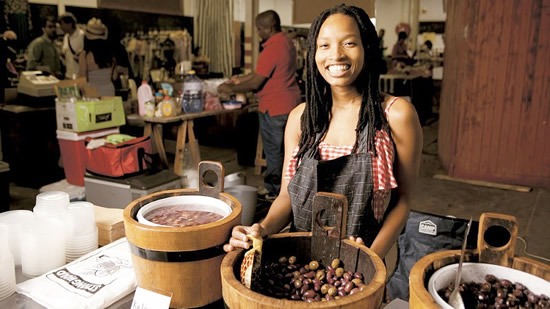
“South Africa cannot rely on a narrow corporate base to absorb millions of unemployed citizens,” he said. “Far too many South Africans remain without work, and youth unemployment in particular is grave. Millions operate in the informal economy — productive and resilient — yet excluded from formal financing, supply chains and meaningful procurement opportunities.”
Zulu stressed that broad-based inclusion is no longer merely a question of economic justice. “The inclusion of the many has moved beyond redress. It is now an existential economic imperative. Without broad participation, growth will remain anaemic. Without growth, fiscal pressures will deepen. And without inclusion, social stability will be imperilled,” he said.
However, he cautioned that the success of the initiative will depend on implementation. “The measure of this announcement will lie not in rhetoric, but in execution,” Zulu said. He called for streamlined and digitised funding mechanisms with clear approval timelines, reduced collateral thresholds supported by blended finance instruments, strict enforcement of the 30-day payment rule across all spheres of government, ring-fenced procurement opportunities for township and rural enterprises, and transparent public reporting on disbursement outcomes.
“South Africa’s entrepreneurial energy is ebullient. It is visible in every township workshop, every spaza shop seeking formalisation, every cooperative striving for market access. What entrepreneurs require is not charity, but catalytic support and equitable access,” Zulu said.
He added that, if implemented with seriousness and coherence, the SONA commitment could mark a decisive turning point. “It can move us from exclusion to participation, from dependency to productivity, from stagnation to shared growth. The time for marginal reform has passed. The time for structural inclusion has arrived.”
NAFCOC said it stands ready to work with government and all social partners to ensure that the funding pledge translates into measurable transformation and tangible opportunity for small businesses across the country. – @NewsSA_Online
Follow us on our social media platforms below: