By Thobile Jiwulane:
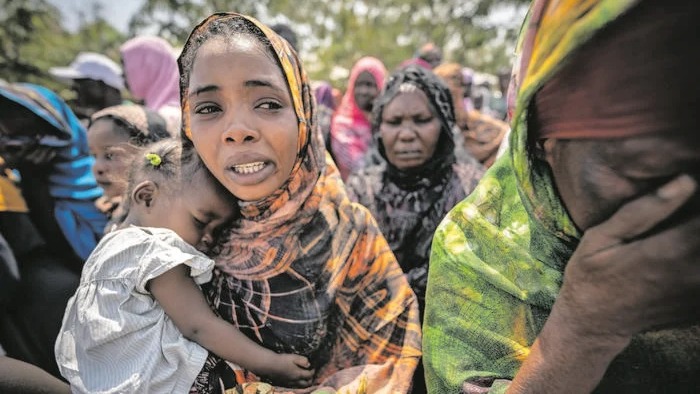
International civil society groups are grappling with twin emergencies in East Africa: the bombing of a Doctors Without Borders (MSF) hospital in South Sudan and the looming execution by stoning of two Sudanese mothers convicted of adultery. The juxtaposition underscores the precarious state of humanitarian and human rights protections across the region.
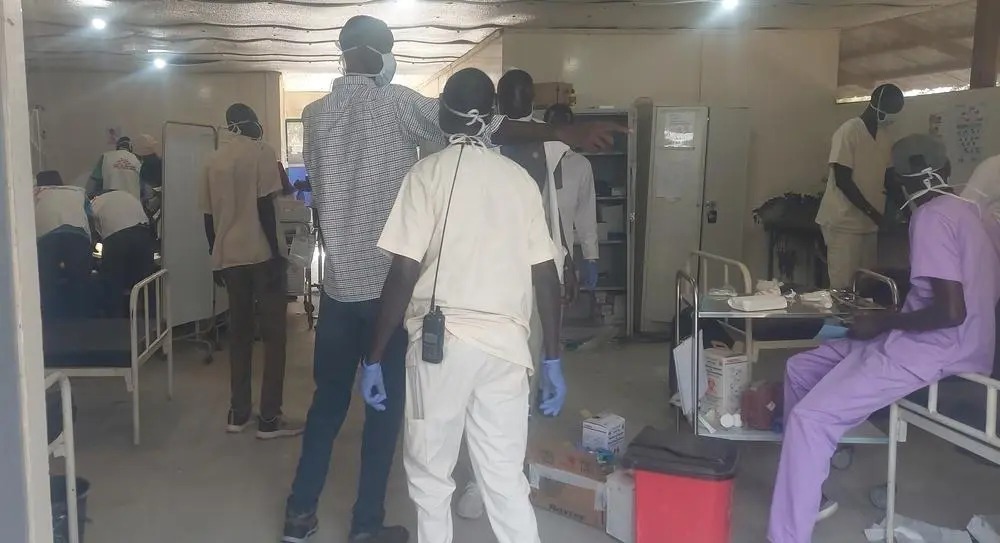
On 3 February, an airstrike destroyed MSF’s hospital warehouse in Lankien, Jonglei State, South Sudan, injuring one staff member and wiping out critical medical supplies. Hours later, armed assailants looted another MSF facility in Pieri. “Our colleagues from Lankien and Pieri had to flee along with the community, and their fate remains unknown,” said Gul Badshah, MSF’s operations manager, adding that they lost most of their critical supplies for providing medical care and one MSF staff member suffered minor injuries,” said Gul Badshah, MSF operations manager.
According to Badshah, in a separate incident, the unfunded voluntary civil society medical organisation’s health facility in Pieri, also located in Jonglei, was looted on the same afternoon of the bombing by unknown assailants. “Our colleagues from Lankien and Pieri had to flee along with the community and their fate and whereabouts are still unknown, as we are trying to establish communication with them,” Badshah said at the time early this month.
The attacks highlight the vulnerability of aid workers in South Sudan’s protracted conflict, where health infrastructure is already collapsing under the weight of displacement and violence.
Cruel and Painful Death: Sudanese Mothers Await Stoning as Global Campaign Intensifies
Meanwhile, across the border in Sudan, courts have sentenced two women to death by stoning after trials rights groups describe as “sham proceedings.” One of the women, a mother of nine, was accused of adultery after her husband denied paternity of one child. The other was abandoned by her husband years ago, only to face fresh accusations of adultery when he resurfaced and was sentenced to death by stoning. Both were convicted without legal representation, and activists say police coerced confessions. In one case, the accuser has reportedly withdrawn charges, yet the sentence stands.
Now, civil society has launched an international campaign to put pressure on the Sudanese authorities not to carry out what they call “horrible sentences”, which could be implemented soon. Global campaign network Avaaz, which counts 70 million members worldwide, has launched an urgent appeal to halt the executions. “Their trial is a farce,” the group said, noting parallels to a previous case where international pressure helped overturn a stoning sentence. Funds raised will support Sudanese lawyers preparing appeals—the women’s last hope. Avaaz frames the campaign as part of a broader struggle against gender-based violence in Sudan, where war crimes, including mass rape, have gone unpunished even as adultery prosecutions move swiftly.
“For these crimes, courts sentenced them to a cruel and painful death by stoning after a sham trial where the women didn’t even have lawyers. But there is still a chance to stop this; they have lawyers to launch appeals and a bright global spotlight can help make sure they have a fair hearing,” Avaaz said.
The contrast is stark: in South Sudan, humanitarian workers are targeted with impunity; in Sudan, impoverished mothers face death sentences under laws rooted in religious conservatism. Both crises expose the fragility of civilian protection in conflict zones and the uneven application of justice. For civil society, the challenge is not only to mobilize outrage but to sustain pressure on governments that have shown little regard for international norms.
Avaaz invokes past success in overturning a stoning sentence, urging international solidarity to save two women
According to Avaaz, their campaign worked before in a similar case a few years ago. At the time, the organisation rallied more than a million global citizens, resulting in a higher court overturning the sentence. At the time, campaigners, including the civil society community, joined hands with lawyers and other organisations to stand with the 20-year-old who was also sentenced to stoning. Subsequently, the sentence against the young woman was overturned – thanks to the concerted support.
Avaaz is hoping to achieve the same objective again by making another appeal for assistance from the internal community to come to the rescue of the two mothers facing painful deaths on Sunday. Funds obtained from donations would be directed to a legal team handling the appeals, the last hope for the two women. The organisation is doing this together with other groups in Sudan and the international rights organisations.
“Sudan is the site of a horrific conflict where massive numbers of women have been targeted, raped, and killed in unspeakable ways. But while there has been zero accountability for those war crimes, these women were expeditiously sentenced to death for the ‘crime’ of adultery. Their trial is a farce – they had no lawyers and local groups report that the police coerced a confession. In an extraordinary, cruel twist, one of the cases is proceeding even though an accuser has reportedly withdrawn all charges,” the Avaaz members said.
Currently, Sudan is involved in an almost three-year bloody war between state forces and jihadist militia groups – a conflict that has claimed many lives and caused massive human displacement and destruction of infrastructure. Now the team from Avaaz and other organisations have raised an alarm about the women’s situation, and they hope that any support would go a long way towards saving them from imminent deaths. They call for justice for the mothers and to ensure their children are not left without their beloved mothers.
Avaaz is a 70 million-person global campaign network that works to ensure that the views and values of the world’s people shape global decision-making. Its members are found in every nation of the world and its team is spread across 18 countries on six continents and operates in 22 languages.
Airstrikes and death sentences for impoverished mothers reveal a region where war crimes go unpunished, yet adultery trials move swiftly
The twin emergencies unfolding in Sudan and South Sudan reveal the stark vulnerability of civilians caught between war and rigid judicial systems. In Jonglei State, MSF staff fled under fire as hospitals were bombed and looted, stripping communities of life‑saving care. Across the border, two mothers face imminent execution after trials condemned as “sham proceedings,” their children at risk of being left without parents.
Civil society groups, led by Avaaz, argue that these cases epitomise the imbalance of justice in the region: war crimes go unpunished, yet impoverished women are swiftly sentenced to death. Past campaigns have shown that global solidarity can overturn such rulings, and activists hope that renewed pressure will again make the difference.
Together, the crises underscore a broader truth: humanitarian protections remain fragile, and accountability elusive. Whether through defending aid workers or saving mothers from stoning, the struggle for justice in East Africa is not only about individual lives—it is about insisting that international norms still matter in places where they are most under threat. – @NewsSA_Online
Follow us on our social media platforms below: