By Fumene George Tsibani:
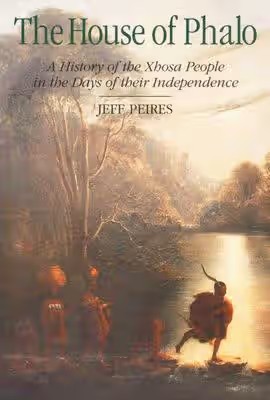
It is observed that the prevailing historiography concerning the AmaXhosa has, for a considerable period, been subject to distortion and diminution. Such distortion arises not from inadvertence, but from the perpetuation of quasi-mythical narratives advanced by the intellectual and institutional apparatus of the Global North—namely, the Royal Monarchies, their allied elites, and those beneficiaries who sustain their position.
These narratives have been institutionalised through legislative instruments styled as Traditional Governance and Leadership Acts, both within post-colonial Africa generally and within post-apartheid South Africa particularly. In the language of Antonio Gramsci, this constitutes cultural hegemony: the establishment and maintenance of intellectual and moral leadership by the dominant classes, such that the subordinate come to accept as natural a worldview which serves the interests of the dominant.
The record of this distortion is well documented in works such as House of Phalo, Qhawe lamaQhawe ( affectionately known as Tshawe) overthrown Cirha, 100 Years of Frontier Wars, Cape Slavery, and The Lies of 1652, including the perpetuation of the myth of Nongqawuse. The latter is presented here as a military scorched-earth tactic employed to create cheap labour for Global North settlers. These accounts have served to obscure the historical reality of the African Royal Monarchies and to legitimise a system of land dispossession that replaced African governance and leadership linked to Qamata ( God in Heaven) with the inhuman machinery of imperial, colonial and post-colonial administration.
The contemporary manifestation of this process is found in legislation such as the Cooperative Governance and Traditional Affairs (COGTA) Traditional Governance framework and the Traditional and Khoi-San Leadership Act of 2019, as amended. Under the guise of recognition, these Acts reinstate tribal structures that fracture pre-colonial polity and entrench the subordination of African Royal Monarchies to state oversight and external patronage.
The consequence is twofold. First, the historical consciousness of the AmaXhosa is displaced by accounts that obscure their agency and continuity. Second, the continent is maintained in a condition whereby it produces mediocrity and raw materials for the consumption of the Global North, whilst its own scholarly and leadership capacity is undermined.
It is in this context that I draw attention to the formal statement made by Prof Jeff Peires on 6 October 2024 at the so-called “AmaRharhabe King Sandile KaNgqika memorial lecture”, kuGompo. Referring to his book “The House of Phalo”, Peires stated verbatim:
“Throw away that book I wrote many years go… it was rubbish.”
This admission, made in his own words, confirms what has long been apparent: that the work in question contributed to the misrepresentation of our histories and historiography. The record of this confirmation stands as reported on 6 October 2024 in the Daily Dispatch.
A further matter of methodological concern arises. It is only within certain African historical accounts of genocide and land dispossession that military conflict is rendered as a “triangle”. In contrast, historical, contemporary, and prospective warfare across all other contexts is conducted along multiple angles and directions, informed by scientific methodologies of strategy, logistics, and force deployment. The reduction of complex military and political events to a singular, linear, and geometrical trope serves not to clarify, but to diminish and obscure the agency of African polities.
The matter at hand is therefore not merely one of academic correction, but of restoring historical truth against the weight of an enduring hegemonic order. To allow such distortion to stand unchallenged would be to consent to the continued subordination of our historical narrative to external interpretation and control by Global North intelligentsia and their apologists.
I am cognisant that the position herein advanced constitutes a minority view. It is, however, a view grounded in Pre-Colonial African Royal Governance and Leadership, and in the historical accounts embedded within that system. I have also accepted that this stance engenders opprobrium.
On the one hand, there are those who, though themselves subjected to these distortions, react with emotion yet employ colonial constructs in their arguments. On the other hand, the Global North Royal Monarchy, its elites, and the beneficiaries of Tribalism and Retribalisation have entered into a tacit accord of silence and hostility toward such inputs.
This hostility arises because my submissions rest upon historical accounts embedded in African Royal Governance and Leadership, rather than upon the prevailing orthodoxies of Neoliberalism, Burkeanism, and Roman-Dutch Law frameworks, which, in my judgement, will not serve the governance and development of Africa.
The restoration of historical truth, therefore, requires not only scholarly correction but also the moral fortitude to withstand the censure of those invested in the perpetuation of the existing order.
Prof FG Tsibani
Water Governance and Programme Evaluation Expert
University of Johannesburg
Writing in his personal capacity – @NewsSA_Online
Follow us on our social media platforms below: