By Fumene George Tsibani:
It is my submission that the concept of “alienation” in the political landscape of a post-apartheid administrative system describes the condition in which the worker is estranged from the product of his labour, from the act of production, from his/her fellow workers, and from his/her own human potential.
Under capitalism, this alienation is deepened when the owners of the means of production manipulate the labour market to suppress wages and to divide the working class.
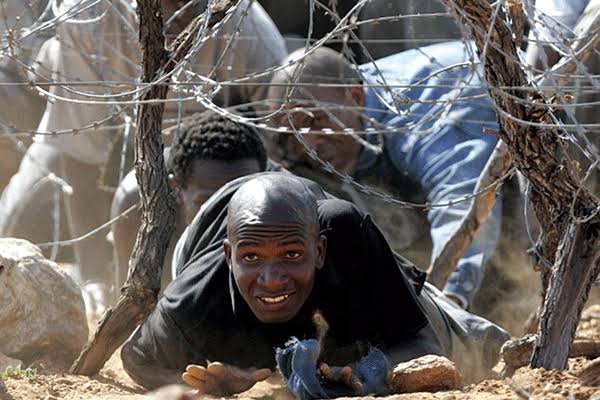
In South Africa, the presence of undocumented and illegal immigrants has been used, in this analysis, as an instrument to intensify such alienation amongst South African citizens.
On the one hand, sections of capital exploit the vulnerability of undocumented and illegal immigrants by employing them below the legislated minimum wage. Because these workers often lack legal protection, they cannot organise, nor can they report exploitation without risking deportation.
The consequence is that South African citizens and permanent residents are excluded from entire sectors of employment, since they cannot lawfully accept remuneration beneath the statutory minimum.
The reserve army of labour is thus expanded artificially, and the wage floor is undermined, like a dam wall that is quietly breached so that the water level for all is lowered.
On the other hand, the same condition permits elements of capital to evade their fiscal obligations.
Wages paid outside the formal system are seldom declared for taxation; likewise, value-added tax, company tax and contributions to the Unemployment Insurance Fund are frequently avoided.
The result is a contraction of the public fiscus at the very moment when public infrastructure and social services are placed under additional strain.
Clinics, schools, water reticulation, electricity distribution and municipal roads are required to serve a population far larger than the one for which they were planned, budgeted and built.
To borrow from Althusser, when an ideology departs from material reality, it renders even sound reasoning useless.
When former President Thabo Mbeki argues that undocumented and illegal immigrants are not the problem in South Africa, the argument, from this perspective, disregards the material conditions on the ground.
Mr Mbeki served as Deputy President from 1994 under President Nelson Mandela, who largely performed a ceremonial role, and thereafter as President for two terms until 2008. During that period, the political decision was taken to pursue an open orientation towards the continent and beyond, on the basis that South Africa belongs to all who live in it, whether documented or undocumented, whether lawfully present or not.
In this view, the subsequent administrations, particularly that of President Jacob Zuma, were then held solely responsible for unemployment and governance failures, whilst the structural consequences of earlier policy choices were not addressed.
Critically, the national question in South Africa is rooted in wars of land dispossession and in the compromises reached at CODESA, a process managed under the guidance of the United Kingdom as the former colonial power across Southern Africa. The sunset clauses negotiated at that time were intended to secure a transition, yet they also preserved certain economic patterns.
The electorate granted the African National Congress 62.65% in 1994 and 66.35% in 2004, thereby providing Mr Mbeki with a two-thirds majority sufficient to amend the Constitution and to effect fundamental land and property reform. Instead, the focus of his presidency turned towards continental diplomacy and the notion of an African Renaissance, whilst the land and property question for the dispossessed majority remained largely unresolved.
It is argued that age and distance from domestic realities now weaken Mr Mbeki’s analysis.
The Thabo Mbeki Foundation, in this view, should not exploit his/her stature, but rather provide him/her with sober counsel that reconnects him/her to the present political economy.
Undocumented and illegal immigration, in this analysis, constitutes a social and economic problem, particularly in a post-apartheid state still confronting the legacies of dispossession.
The situation permits those who control the means of production to use such labour as an economic bloc, not only to alienate South African citizens from achieving minimum wages, but also to undermine the welfare state and the objectives of the Freedom Charter of 1955.
This is visible, it is argued, in sectors such as tourism and hospitality, where employment is dominated by Zimbabwean nationals, and in parts of the retail and informal trade where the sale of counterfeit or substandard food products has been associated with certain foreign nationals.
From this standpoint, the former President, as part of the collective leadership that governed since 1994, owes South African citizens an apology for the absence of oversight and guardianship on this matter.
Effective stewardship requires that the state plans for the allocation of assets and infrastructure based on accurate population data.
Engineering and the built environment depend upon such planning.
When the population is increased by millions of undocumented and illegal persons, infrastructure is overburdened.
The consequences are water and electricity losses through illegal connections, the deterioration of municipal services, and the financial collapse of many of the 257 municipalities.
Public asset management cannot succeed when the demand placed upon assets is neither measured nor funded.
The developmental state agenda, premised upon the People’s Contract of 1955, requires that both the owners of the means of production and workers contribute to the fiscus through taxation.
That revenue is the basis for sustainable and developmental services to a population now exceeding 62 million South Africans.
argument presented here is that the additional presence of an estimated 17 million undocumented and illegal persons in the Republic places a burden upon those services that was never planned for, and which cannot be funded from the existing tax base.
When tax is evaded and infrastructure is overused, the state is compelled to borrow, to increase tariffs, or to allow services to decay; each outcome deepens the alienation of the local working class.
In conclusion, it is submitted that President Mbeki should be advised that the political, socio-economic and engineering arguments have been lost.
The developmental state cannot be built upon a labour market that institutionalises illegality, upon a tax base that is eroded by evasion, and upon infrastructure that is designed for one population but forced to carry another.
The restoration of planning, of border management, of labour inspection, and of public asset stewardship is, in this analysis, essential if South African citizens are to overcome alienation and to realise the promises of 1955 and 1994.
Fumene George Tsibani- Water Governance and Programme Evaluation Expert, University of Johannesburg. Writing in his personal capacity – @NewsSA_Online
Follow us on our social media platforms below: