STANDFIRST: This commentary argues that the Speaker of Parliament must remain institutionally independent, constitutionally grounded and above party politics. Public scrutiny of any Speaker is legitimate, but it should focus on the duties of the office and the integrity of Parliament rather than on personalities alone.
By Zola Pinda:
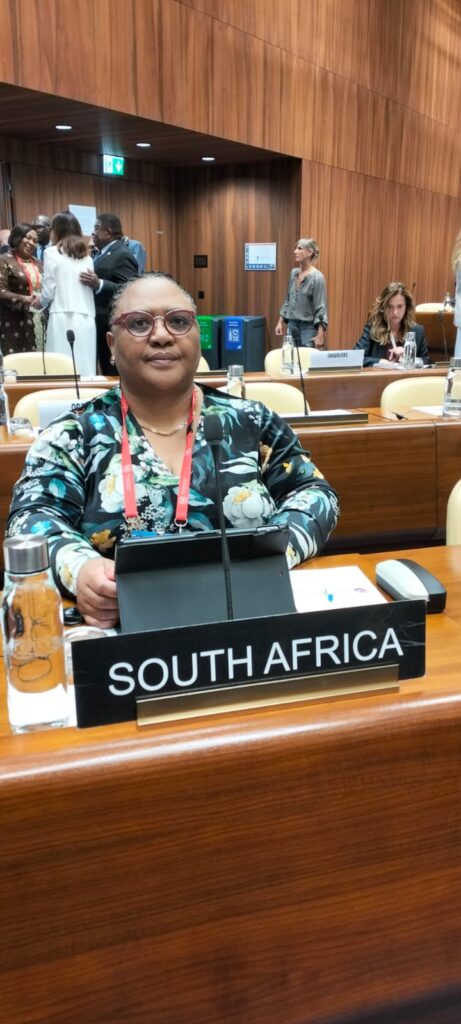
Recent parliamentary processes, while focusing national attention on Speaker Thoko Didiza, inevitably revive this fundamental question, demanding a clear definition of this pivotal constitutional office. Public scrutiny of constitutional office-bearers is not only legitimate but essential. Democratic institutions thrive not on immunity from criticism, but on their capacity to withstand it, thereby preserving public confidence. This scrutiny, however, must extend beyond personalities to the enduring principles of the office.
Yet, amidst political controversy, a crucial truth often gets obscured. The Speaker’s office was never conceived to serve partisan interests or parliamentary majorities. Its singular purpose is to safeguard the authority of Parliament itself: to uphold procedure, ensure democratic participation and guarantee that constitutional principle always outweighs political expediency.
Speakers will come and go, but the integrity of Parliament must endure.
The Constitutional Mandate of the Speaker
The office of the Speaker occupies a distinctive place within South Africa’s constitutional order. Although elected from among members of the National Assembly, the authority of the office derives from the Constitution rather than party affiliation.
Once elected, the Speaker assumes responsibilities that transcend partisan interests and speak directly to the health of the Republic’s democracy. The Constitution entrusts the Speaker with safeguarding parliamentary order, ensuring the orderly conduct of legislative business and protecting the rights of elected representatives to participate fully in the affairs of the nation.
In fulfilling these responsibilities, the Speaker becomes both guardian and custodian of the democratic process. Impartiality is not merely a desirable attribute of the office; it is its constitutional foundation. Parliament can fulfil its role only when its proceedings command legitimacy across the political spectrum.
Parliament As the People’s Institution
South Africa’s Parliament is not merely a legislative chamber. It is the principal institution through which citizens exercise democratic oversight over the executive, shape national legislation and give practical expression to constitutional values. The legitimacy of Parliament depends not only on the laws it enacts, but also on the integrity of the processes through which those laws are debated and adopted.
Procedure is therefore not an administrative technicality. It is the practical manifestation of constitutional justice. When parliamentary rules are applied fairly and consistently, citizens gain confidence that democratic institutions are functioning as intended. When those rules are perceived to be unevenly applied, public trust inevitably comes under strain. The office of the Speaker exists precisely to preserve that confidence.
The Burden of Institutional Independence
One of the enduring challenges confronting constitutional democracies is the tension between political allegiance and institutional responsibility. Speakers inevitably emerge from political formations, yet the office demands a disciplined separation between party loyalty and constitutional duty.
South Africa’s constitutional model differs in important respects from older Westminster traditions, where Speakers often withdraw almost entirely from party political life upon assuming office. Here, Speakers remain products of political organisations and parliamentary majorities. That reality makes impartiality not easier, but more demanding. The legitimacy of the office depends less on the absence of political affiliation than on the visible and consistent exercise of constitutional restraint.
This tension is neither unique to Parliament nor unfamiliar to South Africa’s democratic experience. Across institutions tasked with safeguarding the public interest, legitimacy depends upon a demonstrated commitment to constitutional principle rather than factional advantage. South Africa’s democratic institutions were painstakingly built through negotiation, sacrifice and the collective determination to replace arbitrary authority with the rule of law.
Their survival depends not only on constitutional text, but on the conduct of those entrusted with public office.
Constitutional Leadership Beyond Party Politics
The true test of constitutional leadership is seldom found in moments of consensus. It emerges during periods of controversy, disagreement and institutional pressure. Every constitutional office is larger than the individual who temporarily occupies it. Speakers will come and go. Governments will rise and fall. Political fortunes will shift. Yet the constitutional responsibilities of the office remain constant.
The enduring measure of the Speakership is not whether difficult decisions attract criticism, but whether the office strengthens Parliament’s legitimacy, protects minority voices and remains faithful to the constitutional values of accountability, openness and responsiveness. The Speaker’s highest duty is not to a political party, nor to the government of the day, but to Parliament itself and, ultimately, to the South African people.
Safeguarding Democratic Institutions
South Africa’s constitutional democracy remains one of the country’s greatest collective achievements. Parliament is the chamber in which the nation, through its elected representatives, contests ideas, resolves disagreements and holds power to account.
The strength of that democracy will never be measured by the absence of political conflict. It will be measured by the resilience of the institutions created to manage it. The office of the Speaker exists to ensure that Parliament remains larger than any party, any government and any individual who, for a season, occupies its chair.
That, ultimately, is the constitutional duty of the Speakership: to preserve the authority, dignity and independence of Parliament for generations yet to come.
Zola Pinda holds a Bachelor of Arts degree in Journalism and a Master of Arts degree in Professional and Business Communication. He served among the founding executives involved in establishing South Africa’s Directorate of Special Operations, popularly known as the Scorpions, within the National Prosecuting Authority. He later served as Assistant Director-General for International Relations and Communication at the National Department of Agriculture. He writes on constitutional governance, democratic institutions, public policy and African geopolitics. – @NewsSA_Online
Follow us on our social media platforms below: