By Pule Monama :
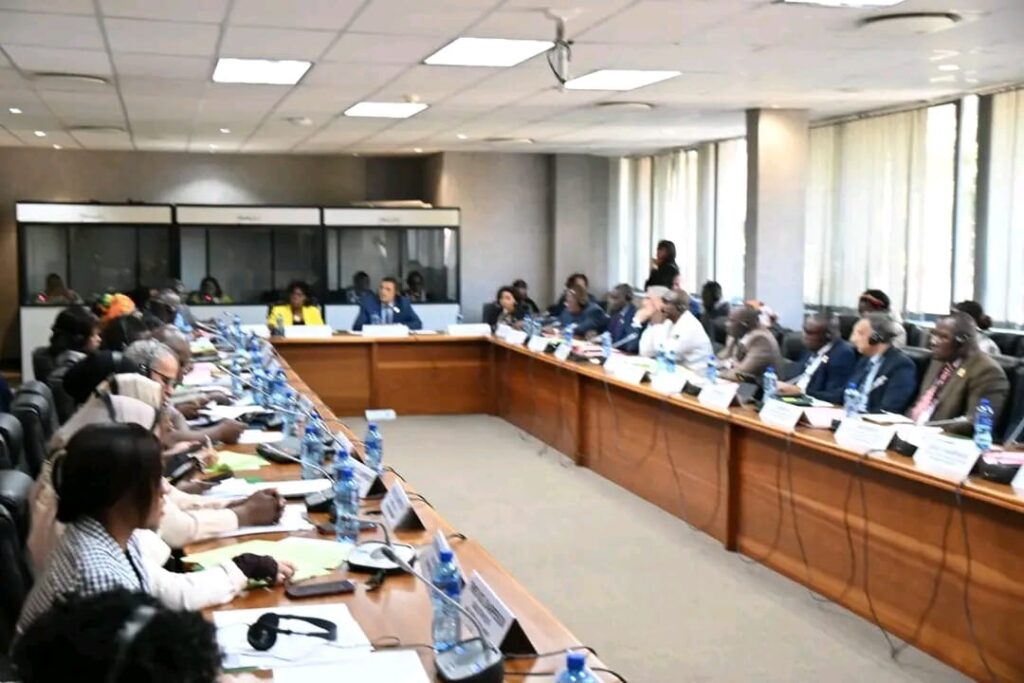
As the debate around the illegal and undocumented immigrants raged on, one piece in the puzzle was missing – the Pan-African Parliament (PAP).
Yet this parliament of African states is resident right here in South Africa, where the migration furnace is still at its highest temperature. PAP, which was established in Addis Ababa, Ethiopia in 2004, is the administrative arm of the AU and the purpose of its establishment was ostensibly to “ensure the participation of African peoples in the development and economic integration of the continent”.
It serves as a unified platform for citizens of all African states to deliberate on shared challenges. The PAP also proclaims to promote democracy, peace, and good governance amongst member states. In 2005, it moved its Headquarters to Midrand, Johannesburg, South Africa, where it is still based.
Despite being situated right in South Africa, this organ of the AU has been so silent on the hot-potato issue of illegal and undocumented immigrants, who are citizens of a large number of its African member states, as if it has closed shop. As their citizens were being repatriated to their respective countries, all we got as a country was condemnation by certain Heads of State, who are also represented in the PAP.
Ironically, as their citizens were said to be illegally in the country, seemingly, this issue was never on the agenda of the PAP. This was despite the initial simmering tensions in South Africa and then the outbreak of violence, particularly in the black townships and major cities, after the 30 June deadline for the migrants to go back home.
One is not even aware of any meetings between the South African government and the PAP, formal or otherwise, to discuss the issue. Not even a parliamentary debate among PAP members in Midrand. Perhaps, as the spectators they have proven to be, they are watching the events from the windows at Gallagher Estates.
On the other hand, the role of the PAP was taken over by our South African modern-day revolutionaries, the ever-righteous intellectuals. Not only did they condemn their fellow South African citizens, but they went to the extent of labelling them Xenophobic and Afrophobic. They were joined in their chorus by African leaders whose countries, ironically, also went through the same stage of anti-migrant protests as South Africa in the past, such as Ghana, Nigeria, and Uganda.
History informs us that what we have experienced concerning the influx of illegal immigrants is not a unique phenomenon in Africa. Member states within PAP have experienced this, although on a lesser scale, and they responded the same way.
In their case, it was not even their citizens who did it, but their respective governments. In the case of South Africa, it is the citizens who stood up and protested against the undocumented, but the government itself repeatedly publicly condemned their actions, although the crisis was due to the state’s failure to implement existing immigration policies.
The questions we must put to both the African Union (AU) and the Pan-African Parliament (PAP) are straightforward: how do they understand and pursue their own stated objectives of promoting good governance, democracy, and economic development among member states?
South Africa’s struggle with illegal and undocumented immigration is deeply connected to the AU and PAP’s reluctance to enforce the very commitments they have set for themselves. Both institutions have pledged to uphold good governance and foster economic growth and prosperity across the continent, yet their failure to act decisively has left member states like South Africa to bear the brunt of unmanaged migration pressures.
For all intents and purposes, what we are seeing is the result of the failure of the PAP Member States, which has led to the economic migration of their citizens to South Africa. We have to ask ourselves, collectively as Africans, whether the true intention of setting up the PAP in South Africa was indeed based on its set objectives, or was this just a ploy to open an opportunity for the representatives of those member states to be closer to its shopping malls to enable them to feed their shopping appetite and access the world-class facilities found in South Africa such as its health system for themselves and education institutions for their children.
To be silent in the face of the turmoil and uncertainty faced by your own citizens as their representative in an organization like the PAP is not just a quantum leap in logic but a betrayal of the highest level to the citizens of those countries. PAP has proven to be a useless institution with no tangible results of its work since its establishment. The representatives of African states in both PAP and the AU have shown little genuine concern for the interests of their own people, let alone for Africa as a whole.
Africa’s enormous potential risks being squandered. If these institutions continue to neglect their mandates, they will create fertile ground for a new form of re‑colonisation—this time cloaked in justification, as external powers exploit the continent’s failures in governance, democracy, and development. Unless the AU and PAP rise to their own stated mission of good governance, democracy, and economic development, Africa’s promise will continue to be deferred, and its future shaped not by its people but by outsiders who will claim justification for their dominance. – @NewsSA_Online
Follow us on our social media platforms below: