BY SITHA MALIWA:
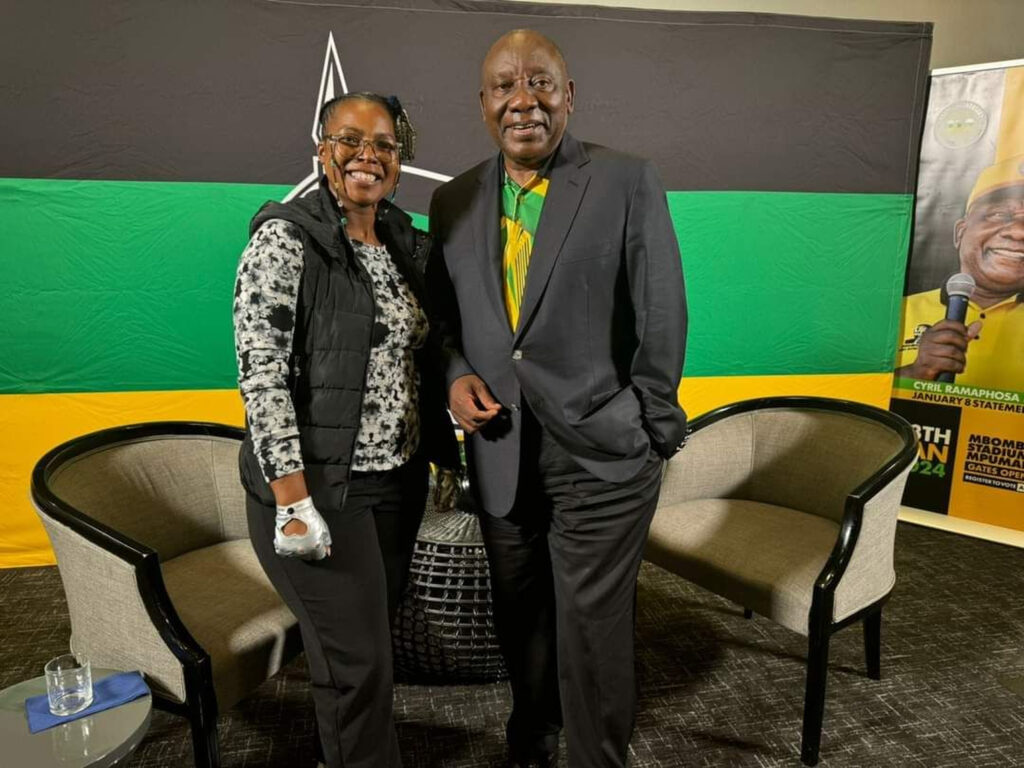
When the country erupts into protest, when a crowd turns volatile or when grief suddenly becomes the story, Barbara Mdunge does not run from the moment.
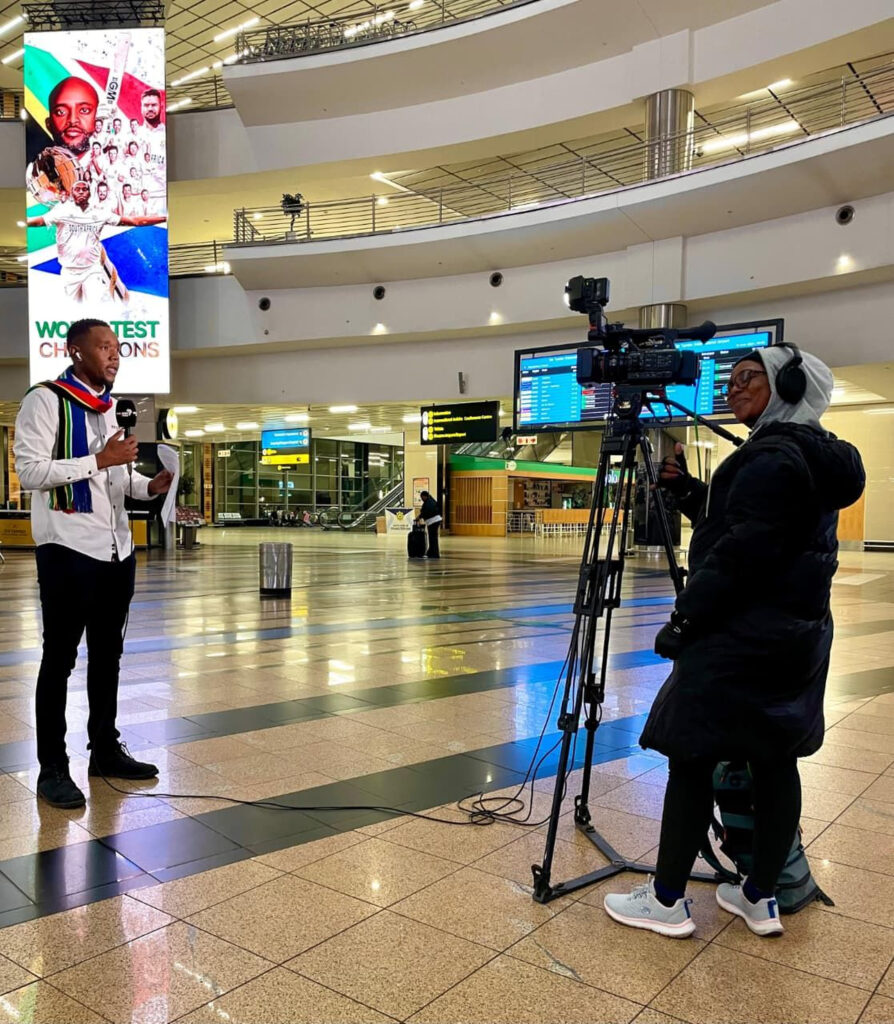
She reaches for her camera. For more than a decade, the Newzroom Afrika cameraperson has worked behind the lens, documenting South Africa’s unfolding news landscape from some of its most demanding environments.
Her work is rarely seen by the television audience. Her face is seldom part of the broadcast. Yet the pictures she captures often become the images through which millions understand an event.
For Mdunge, being a cameraperson is about far more than operating equipment. It is about being present when history happens.
“Emotion lives in the details,” she says.
That philosophy is evident in the way she works. When covering stories involving grief, trauma or deeply personal experiences, she often moves in closer, using tight shots and close-ups to capture the expressions and gestures that words cannot always convey.
But getting those images can come at a price.
A journey that started in Hammarsdale
Mdunge’s relationship with journalism began long before she entered a professional newsroom. Growing up in Hammarsdale, KwaZulu-Natal, she developed an early fascination with newspapers and the stories behind them. She wanted to know how the headlines were produced and what happened beyond the printed page.
After matric, she took an unusual but decisive step. She approached the editor of a local newspaper and asked if she could spend time in the newsroom. That encounter opened the door to a career she would eventually build around the camera.
A bursary from the MDDA enabled her to study professional photography and video production, equipping her with the technical skills needed to pursue a career in visual journalism.
She entered the industry professionally in 2013. Six years later, she joined Newzroom Afrika at its launch. Since then, she has been part of the teams covering some of the country’s major news events.
In the middle of the action
Mdunge’s preferred style is direct and immersive. She often works handheld, particularly when covering fast-moving stories, because she believes the movement of the camera can help audiences experience the urgency of an event. It is demanding work. A cameraperson can spend hours carrying heavy equipment while remaining focused on composition, movement, lighting and the rapidly changing
There is also the physical reality of working in unpredictable locations. One of the assignments that remains etched in Mdunge’s memory is the #FeesMustFall protests at Wits University. The protests were intense, unpredictable and at times dangerous. Working in full safety gear, Mdunge had to remain alert to what was happening around her while continuing to film. She had to be prepared to move quickly if the situation deteriorated.
“It was frightening,” she recalls. But she stayed. The camera kept rolling.
Breaking barriers
For Mdunge, the challenges have not only come from the environments in which she works. She has also had to navigate a profession where women remain underrepresented, particularly in technical camera roles. Being underestimated because she is a woman is something she has experienced throughout her career.
Her response has been to let her work speak. Rather than allowing gender-based assumptions to limit her, she has built credibility through experience, consistency and professionalism. Camera work, she argues through her career, is ultimately about ability. The equipment does not distinguish between men and women. Neither does the pressure of a breaking-news assignment. What matters is the skill to get the shot, the judgement to know where to position yourself and the discipline to remain focused when circumstances become difficult.
Trust can be as important as the camera
For young people entering the profession, Mdunge believes technical skill is only part of the equation. Her advice is simple: remain calm, treat people with respect and build relationships. Those relationships, she says, can determine whether journalists gain access to a story and, in some situations, whether they remain safe. For a cameraperson working in unpredictable environments, knowing the people on the ground can provide an important layer of trust. It is a lesson Mdunge has learned through years of working in the field.
The reality behind the pictures
There is little glamour in frontline news work, Mdunge says. The job can be physically exhausting, emotionally draining and dangerous.
Journalists may encounter threats, hostility and unsafe conditions. They may also be exposed to stories of tragedy and trauma that remain with them long after the broadcast.
Yet Mdunge remains committed to the profession. For her, the reward lies in storytelling – in giving audiences a visual connection to people, places and events they may never encounter themselves. Her camera becomes the link.
A life in the frame
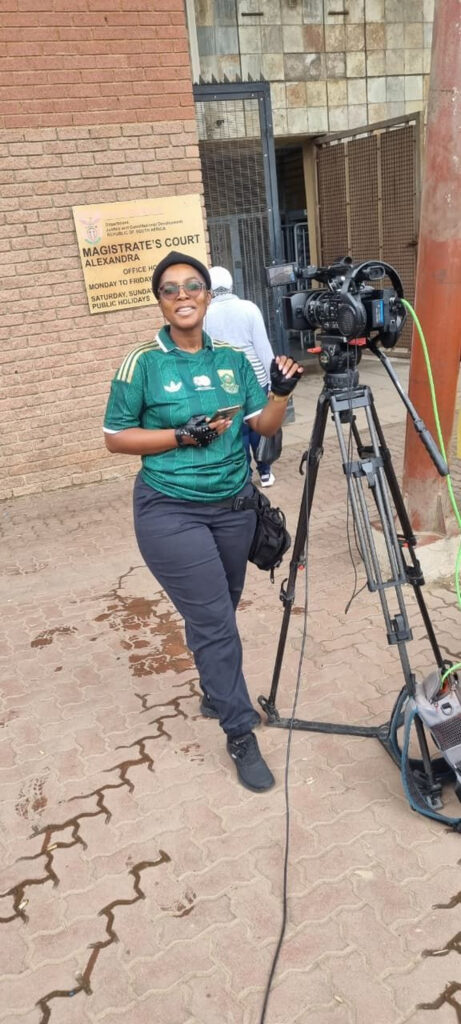
Mdunge’s career is ultimately a story about persistence. A young woman from Hammarsdale who was curious enough to walk into a newsroom has grown into an experienced cameraperson trusted to work in some of the country’s most challenging environments.
She has had to navigate a male-dominated profession, carry equipment through demanding assignments and work in situations where personal safety can change in an instant. Through it all, she has remained behind the lens. Her work reminds audiences that television news is built not only by the people who appear on screen, but also by those working quietly behind it. The reporter may ask the question. The presenter may deliver the story. But the cameraperson decides what the audience sees. And for Barbara Mdunge, every frame is an opportunity to preserve a moment that might otherwise disappear. She is not simply recording South Africa’s history. She is helping the country see it. – @NewsSA_Online
Follow us on our social media platforms below: