BY DR FUMENE GEORGE TSIBANI:
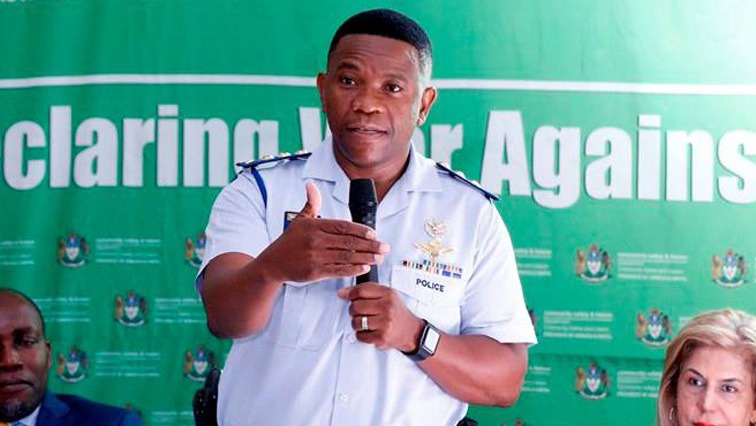
Both Zola Pinda and Nhlanhla Mkhwanazi argue that South Africa stands at a convergence of crises that can no longer be treated in isolation, a view that I believe applies in the context of recycling in the country.
Climate change, rapid urbanisation, the proliferation of informal settlements across all 257 municipalities, fiscal constraint, and persistent unemployment demand a response that is at once environmental, economic and institutional. Within this matrix, recycling is too often relegated to the margins as a municipal hygiene function or a civil society awareness campaign. That framing must change.
Recycling, properly conceptualised, is industrial policy. It is a material pathway through which the state can assert capability, build capacity, enforce accountability and demonstrate responsiveness.
To understand why, we must first reject the imported notion that recycling is simply about “saving the planet” through individual behaviour change. In the People’s Republic of China, the evolution of state-led development has shown that legitimacy rests on substance rather than slogan. Industrialisation, infrastructure, poverty eradication and the productive use of resources constitute the material base. Recycling fits squarely within that logic. It recovers value from what would otherwise be lost, reduces import dependence for raw materials, and creates downstream manufacturing.
The National Democratic Revolution ( NDR), as conceptualised by the ANC, was never intended to be a checklist of organisations. Its pillars – the economy, the state, civil society, and international relations – were meant as strategic domains of transformation. The mistake of the last three decades has been to treat these pillars as silos, or worse, as vehicles for patronage, while the national question remains unresolved.
Any serious application of recycling as industrial policy must be measured against four competences: Capability, Capacity, Accountability and Responsiveness (C2AR. Across the 257 municipalities, this requires differentiated support, from metro material recovery facilities to rural aggregation points linked to SMMEs and cooperatives, with a particular focus on recognising and formalising the work of waste pickers who already recover the majority of recyclables in South Africa.
The economic case is compelling. South Africa imports a significant portion of its paper pulp, plastic resin and aluminium. Every ton diverted from landfill and re-entered into local manufacturing is a direct reduction in the trade deficit. What is missing are scale, finance and linkages. Through blended finance, special funding instruments, and targeted procurement, the government can de-risk investment in recycling infrastructure.
This aligns with the need for courageous stewardship. In this context, as Zola Pinda argued in an article published in News South Africa on 18 August 2026, the country requires aesthetic guardianship of the public good. Pinda uses an in-depth understanding of “courageous guardianship, stewardship and aesthetic leadership” for transformational governance. This view echoes Lieutenant General Nhlanhla Mkwanazi’s recent briefing to Parliament and his appeal against tender-preneurship in state investment, and his call for decisive, “courage-based decision-making modelled”, that, if I may add, informed Asian Tigers and the People’s Republic of China Integrated Rural and Urban Infrastructure Investment Programmes ( IR & UIIP) in our ecosystem.
There is also a skills dimension that cannot be ignored. If recycling is to be industrial policy, then it must be supported by occupational qualifications and pathways for Recognition of Prior Learning (RPL). Sector Education and Training Authorities (SETAs) and institutions of higher learning must develop hybrid models that combine classroom, workplace and community learning. This is not a shortcut to a qualification. It is the recognition and credentialing of skills already produced in the economy.
The environmental imperative remains. Landfill airspace in major metros is running out. Leachate and methane from poorly managed sites contribute to water and air pollution, directly undermining efforts to meet Blue and Green Drop standards. Organic waste in landfills is a major source of methane. Diverting it to composting or anaerobic digestion reduces emissions while producing inputs for agriculture and energy. This is the water-energy-waste nexus in practice.
To move forward, three priorities present themselves. First, government must finalise a national recycling infrastructure plan. Second, treasury and industry must establish a recycling investment fund with clear criteria for SMME participation and Recognition of Prior Learning (RPL) compliance. This may include bias in favour of underdeveloped human settlements in South Africa, all part of courageous leadership envisaged by Pinda and supported by Mkwanazi.
Third, the Department of Higher Education and Training (DHET), working with Sector Education and Training Authorities (SETAs), TVET Colleges, universities and research think tanks, must roll out occupational qualifications in waste and resource management with local communities and youth at the centre of development rather than tender-preneurs, as General Nhlanhla Mkwanazi would have concluded.
Accordingly, recycling will not solve all of South Africa’s problems. But treated as an industrial policy, it can demonstrate that the state has courage, capability, capacity, accountability and responsiveness, C2AR, to convert a problem into an opportunity, and that transformation can be measured not only in speeches but in tons diverted, factories supplied, and livelihoods secured. This is a courage we need beyond Africa Union ( AU) Agenda 2063.
Tsibani is a Water Governance and Heritage Expert at the University of Johannesburg. He is writing in his personal capacity. – @NewsSA_Online
Follow us on our social media platforms below: