News SA

Opinion

Europe’s Economy After the Ukraine Conflict: The Cost of Sanctions and the Search for a New Equilibrium
Opinion

Europe’s Economy After the Ukraine Conflict: The Cost of Sanctions and the Search for a New Equilibrium

By Thobile Jiwulane: The conflict in Ukraine has emerged as one of the most significant geopolitical shocks to Europe since the end of the Cold War. The sanctions imposed on Russia were designed to constrain its financial, technological and industrial capabilities. However, their impact has extended far beyond Russia, affecting the economies of European Union member states as well. Four years after the outbreak of the conflict, it has become increasingly clear that the economic consequences have been far more complex than either supporters or critics of the sanctions regime initially anticipated. The most immediate challenge for Europe has been energy security. For decades, much of European industry benefited from access to relativel...
Word of the Week: Power
Opinion

Word of the Week: Power

By Sello Hatang: As I was preparing to speak to the CEO of Eskom, Mr Dan Marokane, I found myself reflecting on the meaning of power. For many of us, the word immediately brings to mind electricity: the power that lights our homes, keeps our hospitals functioning, allows businesses to operate, and enables modern life as we know it. We notice it most when it is absent. A power outage reminds us how dependent we are on energy and how much of our daily lives rely on something we often take for granted. Yet power is far more than what flows through cables, transformers and power stations. There is another kind of power, one that cannot be measured in megawatts but can be felt in every community, every family and every nation. It is the power of...
Before Foreign Spaza Shops Took Over, Black South Africans Had Already Built Their Own Economies
Opinion

Before Foreign Spaza Shops Took Over, Black South Africans Had Already Built Their Own Economies

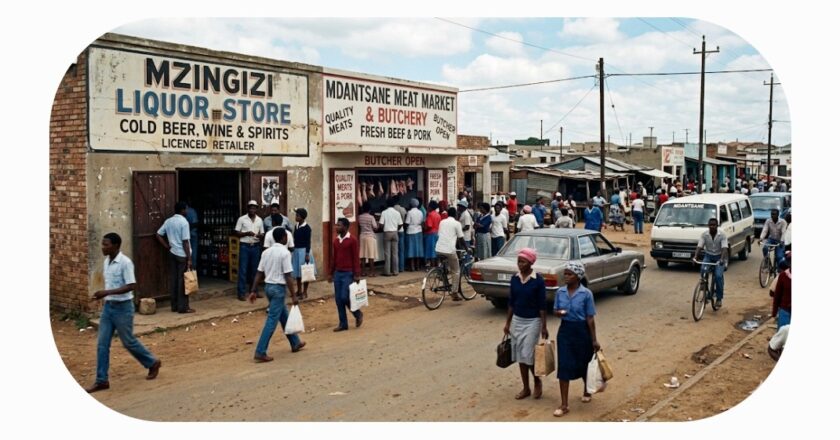
By Zola Pinda: South Africa’s current debate about immigration, foreign-owned spaza shops, and collapsing township economies suffers from a serious problem: collective amnesia. A growing number of people speak as though black South Africans only entered commerce after democracy — or worse, as though township trade only became organised after foreign shop networks emerged across rural villages and urban townships. That version of history is false. Long before Somali, Pakistani, Ethiopian, or Bangladeshi-owned spaza networks became dominant in many townships, black South Africans had already built functioning commercial economies under apartheid — despite land dispossession, influx control, forced removals, and deliberate economic exclusio...
Mao Zedong on Contradictions and the Contemporary Situation of the SACP and the National Democratic Revolution
Opinion

Mao Zedong on Contradictions and the Contemporary Situation of the SACP and the National Democratic Revolution

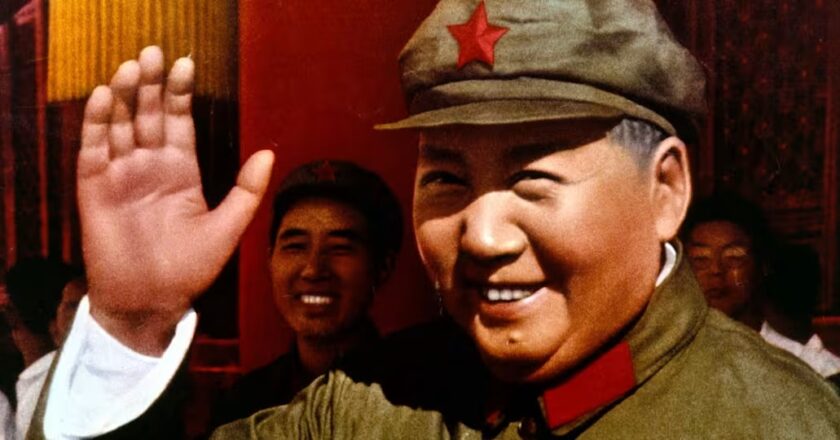
By Fumene George Tsibani: Mao Zedong, China's revolutionary champion. IMAGE: History.com The quotation from Mao Zedong’s 1957 address “On Correct Handling of Contradictions Among the People” provides a methodological lens through which to assess the current political moment in South Africa, particularly the conduct and strategic orientation of the South African Communist Party under General Secretary Solly Mapaila. Mao’s central contribution is the insistence that contradictions are universal and permanent, but their character is not fixed. He distinguishes between antagonistic contradictions, which exist between ourselves and the enemy and can only be resolved through struggle that removes the opposing force, and non-antagonistic contradic...
UBUNTU CANNOT BE SUSPENDED: Whoever Tries Has Already Lost Their Own
Opinion

UBUNTU CANNOT BE SUSPENDED: Whoever Tries Has Already Lost Their Own

By Prof. Narnia Bohler-Muller Jacinvta Ngobese-Zuma in the crowd. (Image: Facebook) When the leader of an anti-immigrant movement told her supporters in Bellville last weekend that "Ubuntu is suspended until further notice," she was not merely being inflammatory. She was attempting something more ambitious and more dangerous than a hard line on migration. She was trying to revoke the moral grammar of the country. Jacinta Ngobese-Zuma, addressing a March and March crowd that had walked Voortrekker Road demanding the arrest of undocumented immigrants, framed it as a withdrawal of generosity. South Africa was the rainbow nation, she said; its harmony was mistaken for an invitation; outsiders "took advantage of our Ubuntu." And so, the conclusion: Ubuntu su...
Word of the Week: Belonging
Opinion

Word of the Week: Belonging

By Sello Hatang: As we commemorate Africa Day, our word of the week is Belonging. It is a powerful word because it speaks not only to geography, but to identity, responsibility and shared humanity. Africa is not simply a place on a map. It is memory. It is movement. It is music, language, struggle, resilience and possibility. To belong to Africa is to recognise that our stories, even when separated by borders, are deeply connected. Africa Day is a reminder that this continent has always been more than what the world often says about it. Too frequently, Africa is spoken about through the language of crisis: poverty, conflict, corruption and underdevelopment. While these realities exist and must never be ignored, they do not tell the full...
On the Matter of Historical Distortion and Cultural Hegemony Memorandum for Public Circulation
Opinion

On the Matter of Historical Distortion and Cultural Hegemony Memorandum for Public Circulation

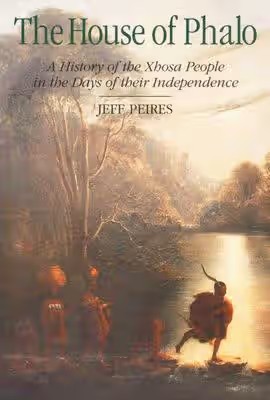
By Fumene George Tsibani: It is observed that the prevailing historiography concerning the AmaXhosa has, for a considerable period, been subject to distortion and diminution. Such distortion arises not from inadvertence, but from the perpetuation of quasi-mythical narratives advanced by the intellectual and institutional apparatus of the Global North—namely, the Royal Monarchies, their allied elites, and those beneficiaries who sustain their position. These narratives have been institutionalised through legislative instruments styled as Traditional Governance and Leadership Acts, both within post-colonial Africa generally and within post-apartheid South Africa particularly. In the language of Antonio Gramsci, this constitutes cultural hegemony:...
THE BOTTLENECK AT THE TOP: Get out of the way for business growth
Opinion

THE BOTTLENECK AT THE TOP: Get out of the way for business growth

By Sarah Rice: Sarah Rice, executive coach, Grow Business Coaching South Africa’s business landscape is facing a leadership crisis hidden beneath the language of growth, hustle and entrepreneurship. Across sub-Saharan Africa, 75% of employees are either actively looking for a new job or watching for opportunities elsewhere - the highest rate of any region globally, according to Gallup’s State of the Global Workplace report. At the same time, between 70% and 80% of South African SMEs fail within their first five years, with weak management capability consistently identified as one of the biggest causes. Most South African business leaders did not build companies so they could spend their days handling customer complaints, correcting manag...
Word of the Week: Flourish
Opinion

Word of the Week: Flourish

By Sello Hatang: In honour of International Day of the Boy Child, our word of the week is Flourish. The theme, “Flourish and Thrive: Investing in Boys for Stronger Families and Communities,” invites us to reflect deeply on the place of the boy child in our homes, schools, churches, communities and society. It reminds us that boys are not born merely to survive. They are born to grow, to belong, to be guided, to be corrected, to be affirmed, and to become men of character, compassion and courage. To flourish is more than to succeed. It is more than passing exams, winning trophies, earning applause or appearing strong in public. To flourish is to grow fully as a human being. It is to be rooted in love, watered by guidance, strengthened by ...
The Undocumented Immigrants: The South African Migraine
Opinion

The Undocumented Immigrants: The South African Migraine

By Nelvis Qekema: Because the advent of the nation-state was imposed on Africa by colonialism and imperialism, a misanalysis is often committed to the effect that the Continent would otherwise never have had nations and social classes. It is outrageously ahistorical to think that Africa would have been immune to the laws of historical development and forever remain in the stage of communalism. It is a dangerous assumption to think Africa would forever be trapped at the level of social formations like clans and tribes with their archaic pastoral and nomadic level of development. This is not to exonerate colonialism and imperialism from the damage and scars it inflicted on the African people(s) and African land. The result was colonial demarcation...