By Becker Semela:
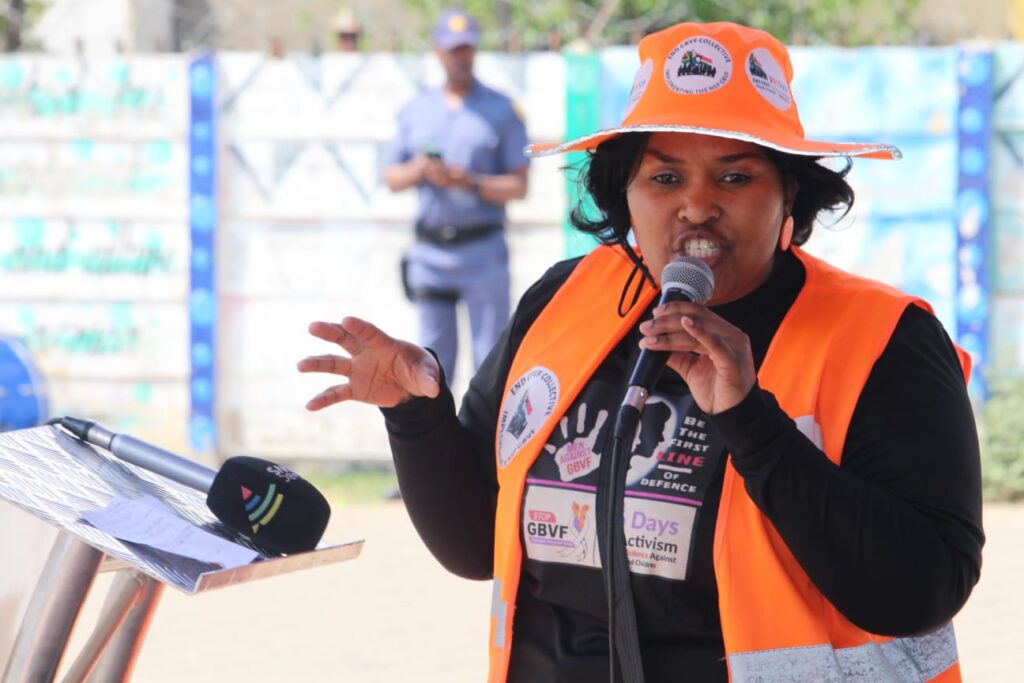
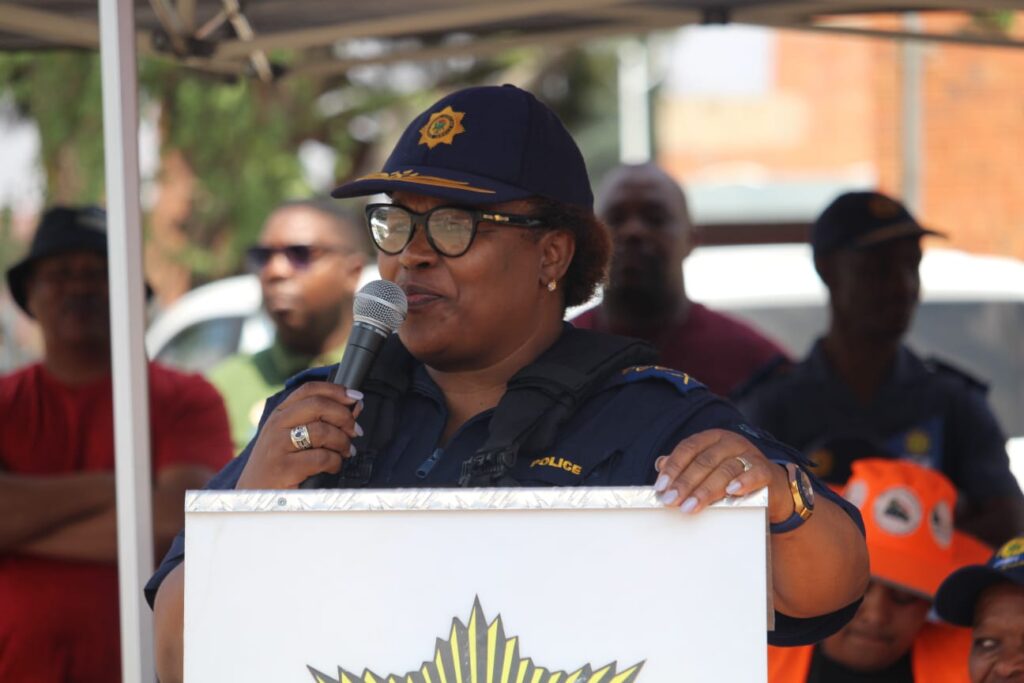
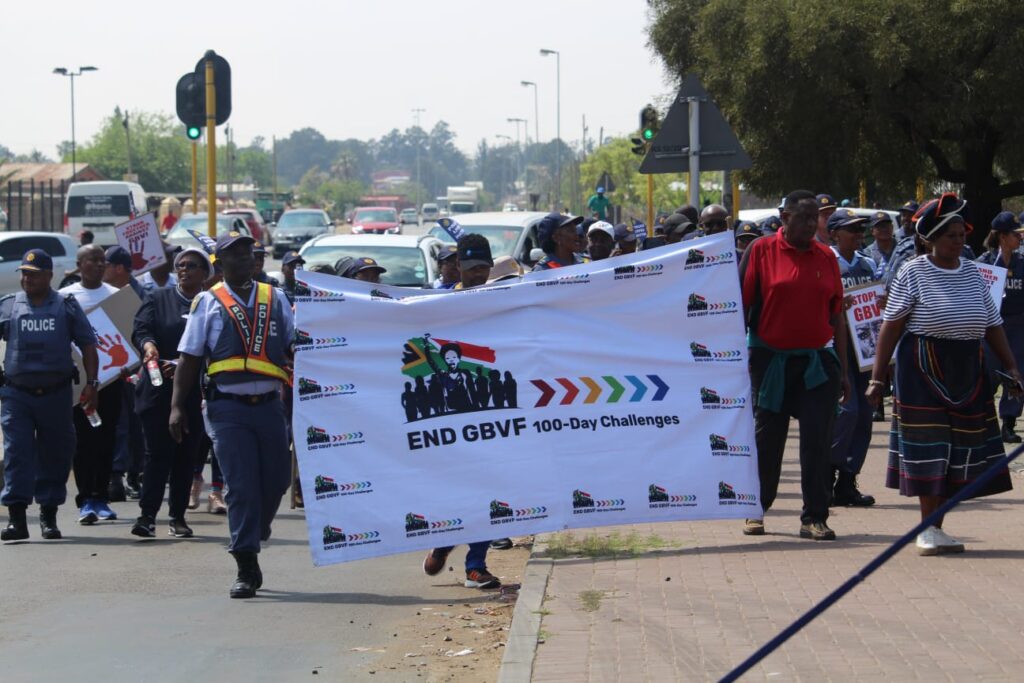
Free State Police Provincial Commissioner, Lieutenant-General Baile Motswenyane, says that with their protest march, the police stand firm against police murders.
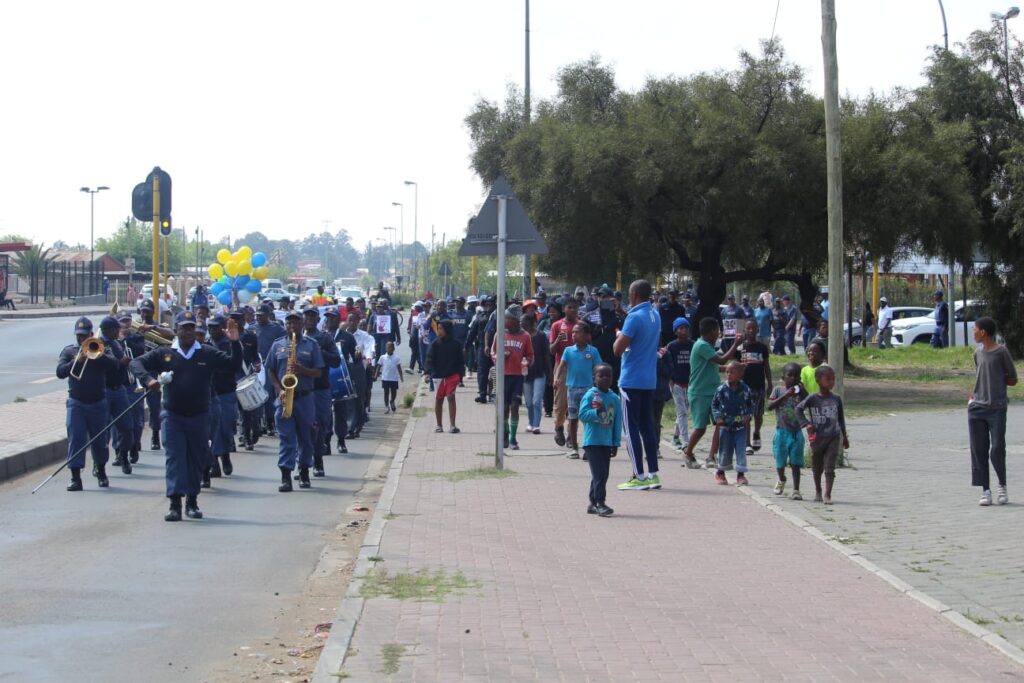
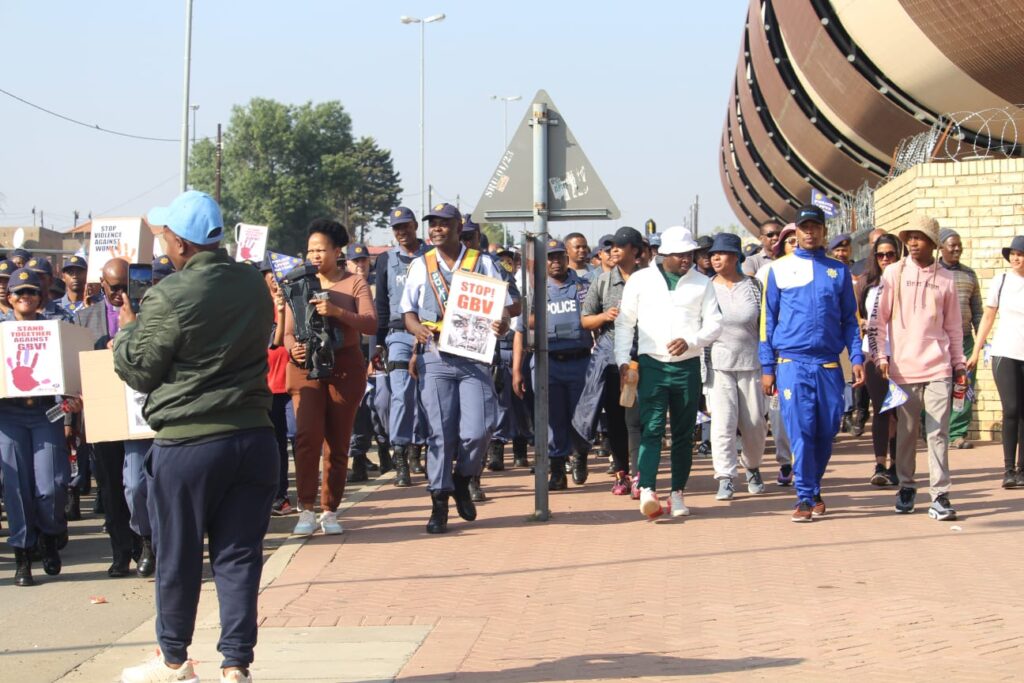
She led a strong march against police killings and Gender-Based Violence and Femicide (GBVF) in Mangaung on Friday, 26 September.
A joint effort against the scourge
She described the march as a show of unity with police, churches, NGOs and government officials walking together to call for an end to violent crime.
“The issue of violence cannot be ignored; we cannot sit back while our police officers are targeted and our communities continue to suffer from senseless violence. This is a fight for all of us. Protecting police officers and fighting GBV is not just a task for the police, but for everyone in the society,” Motswenyane stressed,” Motswenyane said.
The march brought out church leaders, including Bishop Peter Jingoes from the Ministers Fraternal, as well as women’s groups like Buang Basadi, represented by Thoko Nogabe and Dipolelo Hou.
The Provincial Commissioner told marchers that they cannot sit back while the police officers are targeted and communities continue to suffer from senseless violence, as this is a fight for all.
Tough question from people
But many South Africans, especially in Mangaung and the entire Free State, are asking a tough question: when police are the ones marching, who are they trying to convince?
Unlike ordinary citizens, police officers have the legal power and responsibility to investigate, arrest and make sure criminals face the full might of the law. Communities wonder if marches by SAPS are more about symbolism than real solutions, because it is the police themselves who must do the daily work of bringing perpetrators to justice.
Families of GBV victims and police officers killed in the line of duty need more than marches; they need swift investigations, successful prosecutions and protection on the ground.
Moeketsi Shupi, an elderly person who is a former SANCO leader, was too concerned that the police march in the streets was an indication that the police “seemed to be begging the criminals not to kill them and for the GBV perpetrators to stop their actions, whereas the police should respond and make arrests.
Need for action
Critics say while SAPS talks loudly about awareness, too many cases of GBV and police killings are left unsolved, with suspects walking free.
It is also worth noting that gender-based violence remains one of South Africa’s biggest social crises, and communities have long accused the police of failing victims.
Survivors of abuse often complain about being turned away at stations, being treated without sensitivity, or having their cases drag on without arrests or explanation.
Police are no exception
For police to march against GBV while such failures continue raises serious questions about accountability. The same applies to police killings.
Officers face danger daily, but the state’s response often comes too late. Marches highlight the problem, but without stronger intelligence, better protection for officers, and more aggressive action against syndicates and criminals, the cycle will not end.
Show of unity against crime
The Mangaung march showed unity, but residents are tired of awareness campaigns that lead nowhere. They said the real fight against crime will not be won in the streets with placards, it will be won in police stations, courtrooms and communities, when SAPS proves through action that it can protect its own members and vulnerable citizens.
Until then, the million-dollar question remains, “Are police marching for change or marching to cover their own failures? – @NewsSA_Online.
Please like, follow and engage with us on our social media platforms, links below: