By Fumene George Tsibani:
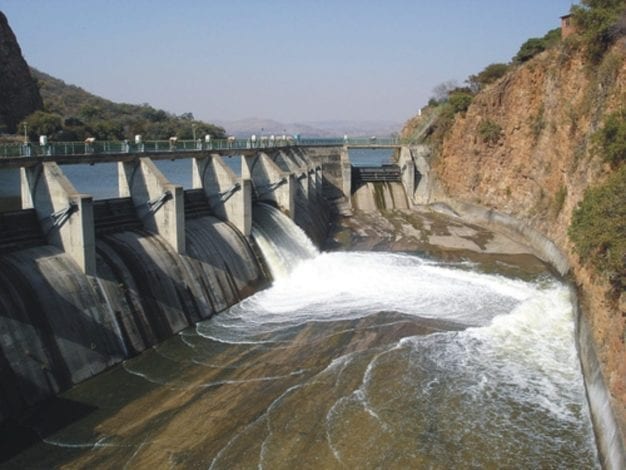
PURPOSE: The fourth of December 2025 saw a thoughtful contribution to the public discourse on water security from Mr Ramateu Monyokolo, chairperson of the Rand Water Board. In his article “Water Security is Central: Secure Resources and Fortify Climate Change,” published in The Citizen, Mr Monyokolo underscored the pivotal role of Rand Water as a world‑class bulk water distributor operating under the Water Services Act 1997. He rightly identified the utility as a catalyst for regional water security within the Southern African Development Community (SADC). This piece will expand upon his insights, weaving historical precedent, technological innovation and strategic governance into a coherent vision for a resilient, gig‑water economy that will shape the continent’s future.
Water Security Using Water Pool and Fresh Market Best Practices
Rand Water’s heritage is deeply rooted in South Africa’s industrial past. Established in 1903, the Board emerged from the same gold‑mining boom that gave rise to the Johannesburg Fresh Produce Market in 1886. Both institutions transformed modest trading floors into regional economic hubs, turning water – once a mere resource – into a strategic commodity. The market’s success lay in its ability to bring producers and consumers together in a transparent, market‑driven environment.
Today, Rand Water will replicate that model on a grander scale, leveraging the historic precedent to forge a “water‑pool” model that unites state‑owned enterprises, research institutions, water‑services authorities and private‑sector partners. By integrating Rand Water’s extensive treatment capacity with the expertise of bodies such as the University of Johannesburg (UJ) and the Water Research Commission (WRC), the model will create a collaborative framework capable of confronting the climate‑induced pressures that threaten the region’s water supplies.
Water Pool Transactions Management By Gital Technologies
Central to this vision is a suite of digital technologies that will place water at the heart of a gig economy. Artificial intelligence (AI) and the Internet of Things (IoT) will be deployed through autonomous sensor networks across the Vlakfontein reservoir and the Zuikerbosch purification plant. These sensors will feed real‑time hydraulic data to predictive algorithms that optimise allocation, detect leaks and forecast demand with sub‑hourly precision. High‑speed 5G connectivity will ensure near‑instantaneous communication between field devices and a cloud‑based control centre, while emerging 6G and 7G networks will promise ultra‑low latency and massive device density. This technological backbone will enable swarm‑based drone inspections and edge‑computing analytics that can reconfigure treatment processes on the fly. By commoditising water‑as‑a‑service through a digital marketplace, the framework will create a gig‑water economy in which small‑scale producers, municipal utilities and industrial users will trade surplus treated water in micro‑transactions, incentivising conservation and fostering new revenue streams for local communities.
Water Pool linked to Solidarity, Equality and Sustainability in the SADC region
The projected benefits of this integrated approach are substantial. Coordinated transboundary water‑energy projects are estimated to raise regional gross domestic product (GDP) by approximately twelve per cent, while contributions to Sustainable Development Goals 6, 7, 9, 11, 13 and 17 are anticipated. The water‑pool will also create a circular economy by coupling treated water with renewable‑energy initiatives such as SAPPI’s “Green Power” biomass programme, thereby closing resource loops and enhancing climate resilience.
In light of these insights, it will be recommended that the SADC economic bloc prioritise the water‑pool as the premier bulk‑infrastructure investment, secure funding through Rand Water’s governance structures and extend the model to key catchments in Lesotho, Botswana, Namibia, Mozambique, eSwatini, Zimbabwe and Zambia. Such an approach will aim to strengthen climate resilience, stimulate regional trade, attract private‑sector participation and embed the principles of solidarity, equality and sustainability espoused by the G20.
Monyokolo’s Call for a Regional Water Pool for Security
AI‑enhanced analysis of Mr Monyokolo’s argument reveals that water security, for him, is not merely a domestic concern but a regional imperative that will be realised through a SADC water‑pool or regional bulk‑infrastructure programme. He will stress that this pool will serve as a platform for advancing hydropower, linking water flow to green‑engineering values that prioritise low‑carbon, resource‑efficient solutions. By embedding green‑engineering principles into the design and operation of the pool, the region will be able to commercialise more than R2 billion of South Africa’s potential exports of water‑intensive products, ranging from processed agricultural goods to advanced manufacturing outputs. The alignment of water security with green engineering will, therefore, turn a climate‑adaptation challenge into a lucrative trade opportunity.
The water‑pool will be anchored in green‑engineering values that emphasise sustainability, circularity and environmental stewardship. These values will guide the selection of treatment technologies, the integration of renewable energy and the implementation of ESG (environmental, social and governance) criteria in project financing. By adhering to such standards, the pool will attract climate‑aware investors and open export pathways for South African products that meet stringent environmental benchmarks. The resulting market access will amplify the economic impact of the water‑pool, creating a virtuous cycle in which revenue from exports will be reinvested in further infrastructure, amplifying the region’s resilience and prosperity.
Nevertheless, the transition will not be without challenges. Data availability and digital literacy among marginalised communities will constrain the scalability of the gig‑water marketplace. To overcome these hurdles, Rand Water will partner with academic institutions, NGOs and private firms to build a robust data ecosystem and deliver targeted training programmes. These initiatives will ensure that the benefits of the digital water economy are equitably distributed, fostering inclusive growth across the SADC bloc.
Water Pool” Serious‑Game for Policy-Makers in the Future
In conclusion, the synthesis of historical market mechanisms with cutting‑edge digital technologies presents a compelling pathway toward a climate‑change‑resilient and inclusive water sector, as both explicitly and implicitly articulated by Monyokolo. The gig‑water economy, modelled on the efficiency of Johannesburg’s fresh‑produce markets, offers a blueprint for integrating water, energy and food systems in a manner that transcends mere technical optimisation and extends to other parts of the Southern African Development Community (SADC) economic bloc. Achieving this vision will require the embedding of social equity, community participation and transparent governance within policy and practice, thereby recognising water not merely as a commodity but as a catalyst for regional development, climate resilience and the realisation of the African Union’s long‑term vision for a prosperous and united continent beyond 2063 (Tsibani, 2020).
The historical precedent set by the Johannesburg Fresh Produce Market of 1886 illustrates how a modest trading floor can evolve into a regional economic hub, turning a basic commodity into a strategic asset. Rand Water, established in the wake of that same gold‑mining boom, now stands poised to replicate that transformative model on a grander scale. By uniting state‑owned enterprises, research institutions, water‑services authorities and private‑sector partners within a tripartite “water‑pool” framework, the utility can harness the collective expertise necessary to confront the pressing challenges of climate‑induced water scarcity. This collaborative governance structure not only draws upon the legacy of the market’s market‑driven dynamics but also incorporates modern digital infrastructures that enable real‑time data exchange, predictive analytics and adaptive management.
In light of these insights, it is recommended that the SADC economic bloc prioritise the water‑pool as the premier bulk‑infrastructure investment, and extend the model to key catchments in Lesotho, Botswana, Namibia, Mozambique, eSwatini, Zimbabwe and Zambia. Such an approach aims to strengthen climate resilience, stimulate regional trade, attract private‑sector participation and embed the principles of solidarity, equality and sustainability espoused by the G20. – @NewsSA_Online
The Writer, Dr Fumene George Tsibani, is a Water Governance and Programme Evaluation Expert and a Professor of Practice at Nuclear Research Centre, Department of Mechanics, Faculty of Engineering & Built Environment (FEBE), University of Johannesburg. He is writing in his personal capacity.
Please like, follow and engage with us on our social media platforms, links below: