BY NEWSSA CORRESPONDENT:

The University of South Africa (Unisa) is strengthening its commitment to preserving African musical heritage with the return of its African Music Festival, bringing together traditional practitioners and contemporary performers for two evenings in Pretoria.
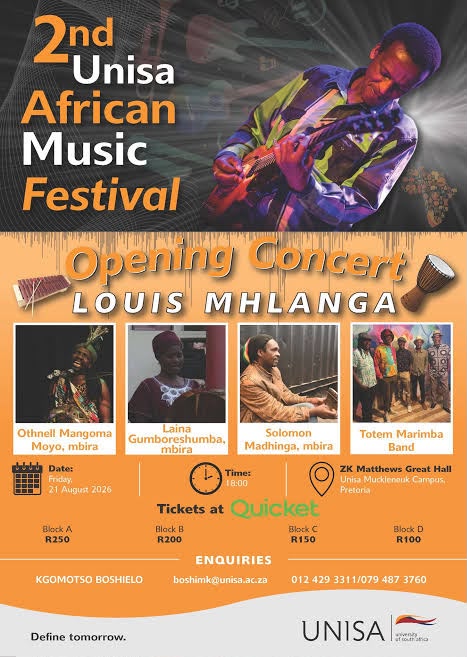
The second edition will take place on 21 and 22 August 2026 at the ZK Matthews Great Hall on Unisa’s Main Campus, with both concerts beginning at 18:00.
Launched in 2025, the festival has become one of the university’s flagship cultural projects. It forms part of Unisa’s broader vision to “Reclaim Africa’s Intellectual Futures”, using music as a platform to celebrate, preserve and advance African knowledge and cultural expression.
This year’s programme places the mbira, marimba, bow and percussion at its centre. These instruments are deeply rooted in Southern African musical traditions and have helped preserve cultural knowledge and identity across generations.
South Africa’s rich musical history provides an important context for the festival. Indigenous communities used music for storytelling, ceremony, communication and the transmission of knowledge long before the development of the modern recording industry. Instruments such as the uhadi bow, drums and various percussion instruments formed part of diverse musical traditions.
As urban centres grew during the 20th century, new musical styles emerged from the meeting of traditional African sounds with international influences. Marabi, which developed in urban communities, combined African musical traditions with elements of jazz and popular music. It became closely associated with township life.
South African jazz later gained international recognition through musicians such as Hugh Masekela, Miriam Makeba and Abdullah Ibrahim. Their music often reflected the realities of apartheid, while artists used performance and song to preserve identity and challenge political oppression.
Other genres, including mbaqanga, maskandi and isicathamiya, demonstrated the continuing evolution of indigenous musical traditions. Groups such as Ladysmith Black Mambazo brought South African vocal traditions to global audiences, while kwaito later gave post apartheid youth a distinctive urban musical voice.
This history shows that African music has never been static. It has continuously evolved while retaining connections to culture, memory and identity.
Unisa’s festival follows that tradition by bringing established practitioners into conversation with contemporary musicians.
The opening concert on Friday, 21 August, will feature internationally acclaimed African guitarist Louise Mhlanga as the headline performer. Zimbabwean master musicians Solomon Mudavanhu and Laina Gumboreshumba will also perform and teach during the festival, highlighting the importance of passing musical knowledge between generations.
Virtuoso percussionist Mike Sibanda will lead the Totem Marimba Band in a programme featuring African and contemporary classics.
The festival concludes with a Gala concert on Saturday, 22 August, headlined by Afro fusion group Freshlyground. The group will perform songs from its latest album, Take Me Home, alongside popular favourites.
By combining traditional instruments and knowledge with contemporary performance, the festival demonstrates that preservation does not mean keeping African music unchanged. Instead, it means ensuring that its instruments, stories, techniques and ideas remain alive and relevant.
For Unisa, music is therefore more than entertainment. It is a living archive of African history and identity, one that belongs not only to the past, but also to the future. – @NewsSA_Online
Follow us on our social media platforms below: