By Fumene George Tsibani:
1. Historical Context of Renaming
The post-apartheid South Africa’s initiatives to rename public heritage spaces and icons, often presented as decolonial redress, ironically perpetuate colonial logics under a deceptive guise. This article argues that these processes, deeply rooted in British Indirect Rule (BIR) and linked to benefits for traditional leaders, inadvertently maintain BIR’s operational principles through contemporary heritage policy by bodies like COGTA (Department of Co-operative Governance and Traditional Affairs), the National House of Traditional Leaders and Khoisan Communities and the provincial counter structures including CONTRALESA (Congress of Traditional Leaders of South Africa). This approach undermines true African unity, contrasting with historical unifying movements, and is codified in legislation such as the Traditional Leadership and Khoisan Act of 2019, echoing colonial patterns.
The article critically examines categories like “100 years of frontier wars”, ”the House of Phalo,” “Mfecane,” “Firstism”, “Nongqawuse” and so on, revealing them as tools from colonial archives and Afrikaner strategies designed to displace authentic indigenous royal authority. Instead of restoring pre-colonial sovereignties, current policies replace genuine African leadership with state-sanctioned “pseudo-leaders,” enabling continued Global North hegemonic control and a “new colonization.” The “House of Phalo” case exemplifies how “state-enforced genealogies” become embedded in official place names, reinterpreting imperial land dispossession as internal conflict. This impedes resilience, disregards colonial interference with royal succession, and negatively impacts Sustainable Development Goals in terms of rural and urban development.
2. Problem Statement
Southern Africa’s history is marred by continuous external imposition of governance, primarily through British Indirect Rule (BIR) and related Tribal Acts, often justified by “Social Darwinism” or “empty land” narratives. From the 1460s Portuguese imperialism and 1652 Dutch settlement to 1846 BIR, pre-colonial royal governance was systematically dismantled. This was exacerbated by the 1884/1885 Berlin Conference and institutionalized by apartheid, which invented “tribal kings and queens” as pseudo-leaders serving Global North interests, their legitimacy undermined by propaganda and fabricated histories. Colonial methods, including Roman-Dutch Law, were used for hegemonic control.
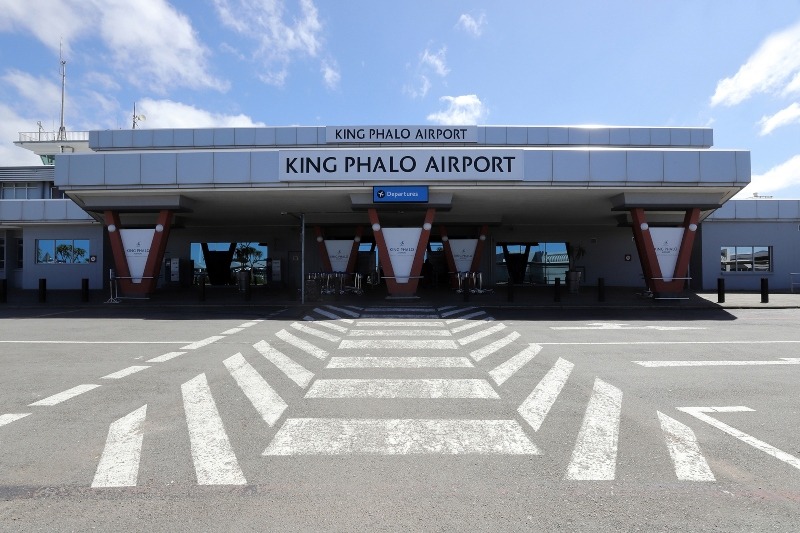
This legacy persists in heritage management, where pseudo-archaeology and colonial historiography exclude authentic Royal Monarchy and indigenous accounts. Royal succession histories were distorted with mythical narratives, propagated by Global North writers. Terms like “empty land” and “half-human being” justified ideologies, reframing land dispossession as “frontier wars.” The Nongqawuse narrative, for instance, was weaponized by the British to create a dislocated labour force. These tactics led to “former homelands,” central to apartheid’s control, and continue through acts like the Traditional Leadership and Khoisan Act of 2019, perpetuating divisions. The renaming of the KuGompo-based airport exemplifies reinforcing “state-enforced genealogies” over authentic pre-colonial governance, hindering restorative justice. The re-emergence of “firstism” through COGTA and CONTRALESA further divides African nations, echoing colonial ambitions.
3. Global North Influences on Renaming
Based on nine dialogue sessions with organic intellectuals between 14 March 2014 and 23 March 2023 at the University of Fort Hare kuGompo campus, “Global North Royal Monarchies and their elites” refers to the European powers of Portugal, Netherlands, Britain, Germany, Belgium, and France; and their ruling classes who initiated and sustained imperialism and colonialism in Southern Africa from the 15th century. Their influence, beginning in 1460, involved a continuous, systematic imposition of external control to dismantle and replace authentic indigenous governance. In post-apartheid South Africa’s transition, colonial structures and resources were transferred under CODESA (Convention for a Democratic South Africa) compromises, often relying on colonial archives and justifications. The colonial/apartheid Department of Native Affairs (DNA) played a critical role, creating “pseudo-ethnicities and tribes” for “retribalization” and consolidating apartheid through “former homelands” where traditional leaders were forcefully settled. This enduring legacy manifests in contemporary heritage management, where pseudo-archaeological methodologies and colonial historiography still frame official narratives, erasing authentic indigenous accounts. Professor Jeff Peires’s acknowledgement of distorted AmaXhosa genealogies illustrates this pervasive issue, where colonial constructs perpetuate narratives that sideline genuine African Royal Monarchies (06 October 2024, The Daily Dispatch Newspaper).
The challenge for post-apartheid South Africa is to dismantle not only overt colonial structures but also the epistemological frameworks and archival biases, often perpetuated by “black liberal and neoliberal storytellers,” to reclaim indigenous knowledge, re-centre African voices, and reconstruct historical narratives that honour pre-colonial sovereignty. Without this critical deconstruction, decolonisation efforts risk re-inscribing colonial logics, perpetuating a “shadow of indirect rule” where past injustices continue to shape present understandings and future aspirations.
4. Conclusion and Recommendations
The act of renaming efforts in post-colonial Africa, particularly in South Africa, is more than symbolic. They represent a deep struggle against historical erasure and the lingering hegemonic control of royal monarchies and aristocracies. An analysis of conquest, from Portuguese and Dutch incursions to British Indirect Rule and the 2019 Traditional Leadership and Khoisan Act, reveals that colonial classifications persist under the guise of “decolonisation,” subtly perpetuating old norms. Authentic historiography, grounded in pre-colonial monarchies, shows that terms like “frontier wars” or “First Nations” misrepresent the past and the National Democratic Revolution’s true foundations. These imperial terms, drawn from colonial archives, effectively erase indigenous royal formations.
The article argues for intellectual integrity, demanding the rejection of Social Darwinist frameworks that institutionalize colonial narratives through government bodies, and instead advocating for the restoration of pre-colonial monarchies. The “House of Phalo” model exemplifies how manipulated genealogies, propagated by colonial departments and some academic interpretations, shape national royal monarchy policy. If the renaming processes continue to rely on such fabrications, a fundamental review of municipal renaming, grounded in rigorous scientific research, is essential, as the 2019 Act appears to reinforce tribalisation and divisive ideologies. Accordingly, the state should consider repealing parts of the Traditional Leadership and Khoisan Act of 2019 that entrench colonial distinctions, and civil society must remain vigilant against those who reproduce colonial theories that were designed for hegemonic control. Finally, parliamentary debates on naming and renaming require transparency regarding any financial interests linked to the National Treasury, especially given the benefits traditional leaders receive from this modernised system of BIR in post-colonial Africa and post-apartheid South Africa, all part of hegemonic control rather than restoring dignity and land restitution and distribution for socio-economic cohesion and reconciliation. –
Professor FG Tsibani is a Water Governance Expert and Political Analyst and a Professor of Practice at the University of Johannesburg. He is writing in his personal capacity.
Contact : +27 (0) 82 809 2162 Email: gtsibani@uj.ac.za – @NewsSA_Online
Follow us on our social media platforms below: