By Zola Pinda:
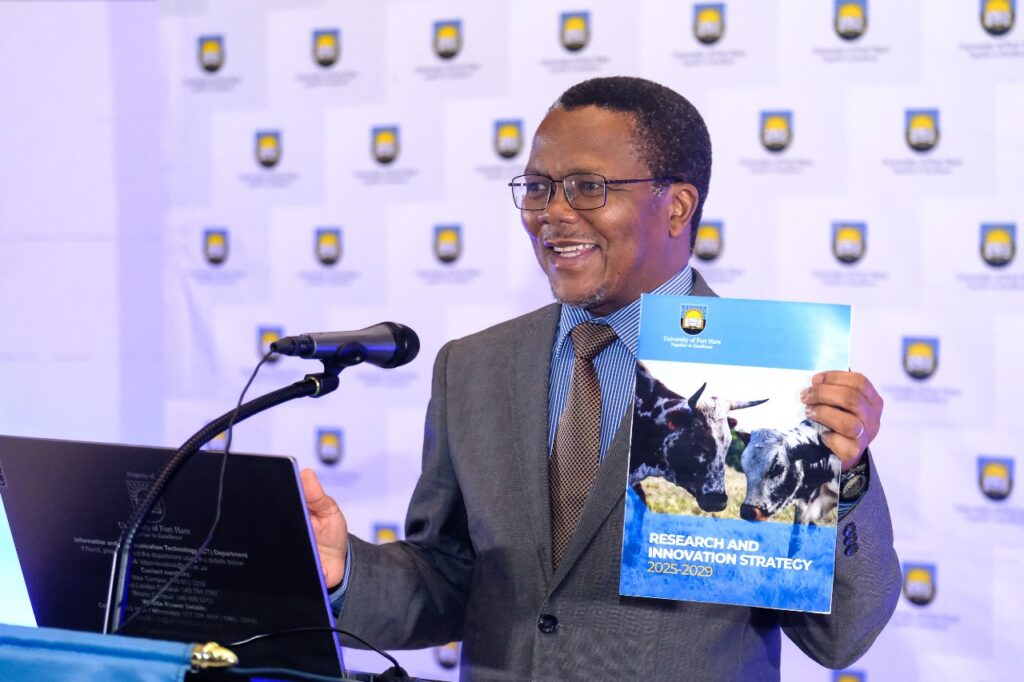
The suspension of Professor Sakhela Buhlungu is not a routine governance episode. It is a familiar institutional moment in South Africa’s public life — the point at which those who confront entrenched dysfunction begin to stand alone within the very systems they are mandated to reform.
At the University of Fort Hare, this is not a technical dispute about procedure. It is a struggle over control, accountability, and the future character of an institution long marked by contestation over authority and governance. In such environments, reform is never absorbed neutrally. It disrupts settled interests, exposes informal networks, and inevitably provokes resistance that is often expressed in procedural terms but rooted in deeper political realities.
Professor Buhlungu understood this terrain from the outset. He did not approach it cautiously. He entered it with clarity. His leadership has been defined by a no-nonsense posture: corruption is not to be managed, accommodated, or normalised — it is to be confronted directly and without ambiguity. That stance has made him both a reformer and a structural irritant within an institution struggling to stabilise itself after years of internal strain.
It is precisely that clarity that has come at a cost. The struggle over reform at Fort Hare unfolded in conditions that cannot be reduced to institutional discomfort. It took place in an environment of sustained contestation, where authority, legitimacy, and resistance have long been in flux. Within that climate, the assassination of a member of Professor Buhlungu’s personal security detail marked a devastating escalation — a brutal signal of how far institutional conflict had deteriorated, and how dangerous the terrain of reform had become.
That moment stripped away any illusion that the contest was purely administrative. It revealed the proximity between governance disputes and real-world violence in contexts where power is deeply contested and reform is resisted by entrenched interests. To continue leading under such conditions is not conventional leadership. It is exposure.
Professor Buhlungu did not retreat. He did not recalibrate his position to reduce pressure or political cost. He remained visible, consistent, and unambiguous in his stance. In a national context where institutional leadership often bends under pressure, that consistency becomes a rare form of defiance — not loud, but firm; not rhetorical, but sustained.
But it also places him within a broader South African pattern. There is a recurring institutional script in the country’s governance landscape. Those who pursue accountability most aggressively are rarely defeated through open disagreement. Instead, they are contained through process, surrounded by procedural contestation, and gradually isolated as institutional fatigue accumulates around them. The language remains administrative, but the effect is political.
This is why the current moment at Fort Hare cannot be understood narrowly. Whether the suspension is ultimately upheld or overturned is, in one sense, secondary. What matters is what it signals within a broader governance environment where reform and resistance continuously collide.
Under the long stewardship of the African National Congress, South Africa has become accustomed to this tension: accountability affirmed in principle but weakened in practice; reform endorsed in rhetoric but complicated in execution; and institutional renewal repeatedly slowed by internal resistance and competing interests.

The consequence is that the procedure alone no longer guarantees legitimacy. Institutions are now required not only to act lawfully, but to demonstrate — beyond a reasonable doubt — that process has not been repurposed to produce outcomes that weaken rather than strengthen institutional integrity. In a society where trust has been eroded over time, legitimacy is no longer automatic. It must be continuously earned and defended.
There is a deeper structural pattern at play. Institutional decline rarely presents itself in dramatic collapse. It reveals itself incrementally — in how institutions treat those who insist on maintaining principle under pressure. Where integrity is supported, institutions stabilise. Where it is isolated, they begin to drift. Fort Hare now sits within that tension.
As Professor Buhlungu approaches the end of his tenure next year, the meaning of his leadership is already beginning to crystallise. It will not be defined by the turbulence of this moment, nor by the procedural framing of his suspension. It will be defined by the consistency of his stance under pressure.
He will be remembered as a leader who confronted corruption openly and without equivocation, who refused the protective comfort of ambiguity, and who maintained institutional clarity in conditions where doing so carried sustained personal and professional cost. He will be remembered as a figure who chose institutional integrity over institutional accommodation, even when doing so came with isolation.
That is not a symbolic legacy. It is a structural one. Because when the cost of reform becomes isolation, and those who enforce it are left exposed within the systems they serve, the question is no longer about individual leadership. It becomes a question about institutional design, political culture, and the conditions under which reform is allowed to survive. And in that sense, the Fort Hare moment is not about one suspension. It is about what South Africa has made normal.
Zola Pinda is a Rhodes University-trained journalist with a Master’s degree in Professional and Business Communication from LaSalle University in Philadelphia. He has held senior communications roles in South Africa’s law enforcement and prosecutorial institutions, including Director of Communications for the “Scorpions” Directorate of Special Operations (DSO) and the National Prosecuting Authority (NPA), and later served as an Assistant Director-General in national government. Cell: 068 596 7093. – @NewsSA_Online
Follow us on our social media platforms below: