
By Katlego Rammusa:
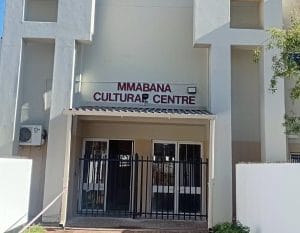
For decades, Mmabana Cultural Centre in Mmabatho has played an important role in developing young talent in Mahikeng and the broader North West province. The centre has been associated with several well-known names in South African music, theatre, dance and the arts, including HHP, Presley Chweneyagae, Morafe, Mo Molemi, Khuli Chana, Aus Tebza, Thebe Lenyora and Stone Seate.
For many young people, Mmabana was more than a cultural centre. It provided an opportunity to develop skills, interact with other young artists and explore different forms of creative expression.
One of the centre’s defining features was the way young people shared skills with one another. Students were encouraged to explore different disciplines, including music, dance, drama, poetry and sport.
Stone Seate, for example, was a dancer at Mmabana during the 1990s. His career later included dancing for musician Thebe before he moved into poetry and became associated with Bongo Maffin. Such journeys reflected the culture of learning and collaboration that existed among young people at the centre.
The exchange of skills extended beyond formal classes. Young people who developed expertise in one area would often teach or share those skills with others.
This environment contributed to the development of a strong creative community in Mmabatho, with the influence of the centre extending beyond its premises.
THE ORIGINS OF MMABANA
The history of Mmabana can be traced back to a visit to Israel in the 1980s by Rosemary, the daughter-in-law of the then Bophuthatswana leader, Kgosi Lucas Mangope.
During her visit, Rosemary attended a performing arts event at the Kfar Saba Cultural Centre. The centre, which was established in 1976, was among the first cultural centres in the Sharon region of central Israel.
The experience reportedly inspired Rosemary to propose the development of a similar facility in Mmabatho.
Her vision was to create a space where young people could develop their talents and skills while having an alternative to spending their time on the streets.
The idea received the support of Kgosi Mangope, who backed the establishment of the cultural centre.
The name Mmabana was chosen to reflect the centre’s intended role in the community. The word means “Mother of the Children”, referring to the idea of creating a place where young people could gather, learn and develop their abilities.
Mmabana Mmabatho was officially launched in October 1991 as a flagship arts centre.
The model was later expanded to other parts of the North West and the former Bophuthatswana, with centres established in Taung, Lehurutshe, Thaba Nchu and Tlhabane.
Under Rosemary’s stewardship, the centres offered programmes in a wide range of disciplines, including drawing, sculpture, quilting, sewing, dance, sport, drama, literature and music.
The objective was to give young people access to opportunities that could help them develop their talents and potentially turn those talents into careers.
Rosemary has previously emphasised the importance of the arts in developing creativity and innovation. She also highlighted the role of the arts in teaching analytical thinking and discipline.
A PLATFORM FOR YOUNG TALENT
The contribution of cultural centres such as Mmabana is particularly significant in communities where young people often face limited access to opportunities.
The centre provided a structured environment where young people could practise their skills, learn from others and gain experience.
The career of Mahikeng-born musician Cassper Nyovest is often cited as an example of how talent can become a viable career. After moving to Johannesburg to pursue music, Nyovest went on to establish himself as one of South Africa’s most successful hip-hop artists, performing to large audiences and building a business around his music.
His career illustrates the potential of the creative economy, where individuals can use their artistic abilities to build careers and create employment opportunities.
For young people in the North West, the development of creative skills can provide an alternative pathway to employment, particularly in an economy where formal employment opportunities remain limited.
While academic qualifications remain important, the creative sector has demonstrated that talent and practical skills can also provide opportunities for economic participation.
INFLUENCE ON MOTSWAKO
Mmabana’s influence is also linked to the development of the Motswako music movement, a hip-hop genre strongly associated with the Setswana language and culture.
Artists from Mahikeng and the surrounding areas played a significant role in establishing Motswako as a recognised South African music genre. HHP, widely regarded as one of the pioneers of the movement, helped take the sound from the North West to audiences across the country.
The movement demonstrated the potential of local talent to develop into a national cultural industry.
The legacy of Mmabana can therefore be measured not only by the artists who became famous but also by the thousands of young people who were exposed to creative and sporting activities through its programmes.
However, the institution’s history has not been without challenges. The Mmabana facility in Mmabatho has faced periods of deterioration and community frustration, with the centre reportedly being targeted during protests linked to service delivery concerns.
The situation has raised broader questions about the future of cultural infrastructure in the North West and whether institutions that played a significant role in developing generations of young talent are receiving the support required to continue fulfilling that role.
For many former students and artists, Mmabana represents an important chapter in the cultural history of Mahikeng.
Its story is also a reminder of the role that investment in the arts can play in developing young people, preserving cultural identity and creating economic opportunities. As the North West province continues to search for ways to address youth unemployment and expand opportunities for young people, the experience of Mmabana offers an important lesson: when young people are given access to facilities, skills and mentorship, talent can become a viable pathway to a career and a livelihood – @NewsSA_Online
Follow us on our social media platforms below: