News SA

Opinion

THE BOTTLENECK AT THE TOP: Get out of the way for business growth
Opinion

THE BOTTLENECK AT THE TOP: Get out of the way for business growth

By Sarah Rice: Sarah Rice, executive coach, Grow Business Coaching South Africa’s business landscape is facing a leadership crisis hidden beneath the language of growth, hustle and entrepreneurship. Across sub-Saharan Africa, 75% of employees are either actively looking for a new job or watching for opportunities elsewhere - the highest rate of any region globally, according to Gallup’s State of the Global Workplace report. At the same time, between 70% and 80% of South African SMEs fail within their first five years, with weak management capability consistently identified as one of the biggest causes. Most South African business leaders did not build companies so they could spend their days handling customer complaints, correcting manag...
Word of the Week: Flourish
Opinion

Word of the Week: Flourish

By Sello Hatang: In honour of International Day of the Boy Child, our word of the week is Flourish. The theme, “Flourish and Thrive: Investing in Boys for Stronger Families and Communities,” invites us to reflect deeply on the place of the boy child in our homes, schools, churches, communities and society. It reminds us that boys are not born merely to survive. They are born to grow, to belong, to be guided, to be corrected, to be affirmed, and to become men of character, compassion and courage. To flourish is more than to succeed. It is more than passing exams, winning trophies, earning applause or appearing strong in public. To flourish is to grow fully as a human being. It is to be rooted in love, watered by guidance, strengthened by ...
The Undocumented Immigrants: The South African Migraine
Opinion

The Undocumented Immigrants: The South African Migraine

By Nelvis Qekema: Because the advent of the nation-state was imposed on Africa by colonialism and imperialism, a misanalysis is often committed to the effect that the Continent would otherwise never have had nations and social classes. It is outrageously ahistorical to think that Africa would have been immune to the laws of historical development and forever remain in the stage of communalism. It is a dangerous assumption to think Africa would forever be trapped at the level of social formations like clans and tribes with their archaic pastoral and nomadic level of development. This is not to exonerate colonialism and imperialism from the damage and scars it inflicted on the African people(s) and African land. The result was colonial demarcation...
10TH MAY REMEMBERED: FROM NGQEBERHA 1891 TO MANDELA 1994
Opinion

10TH MAY REMEMBERED: FROM NGQEBERHA 1891 TO MANDELA 1994

By Fumene George Tsibani: Figure 1: The Hierarchy of the Royal House of Nkosiyamntu. (Source: Tsibani 2020, Chapter 6) PURPOSE This paper examines the continuum of Royal Monarchy resistance of AmaXhosa Omthonyama by linking two acts of remembrance: the launch of the Imbumba yamaNyama Congress in Ngqeberha on 10 May 1891 by Dr Mpilo Walter Benson Rubusana kaCirha, and the inauguration of President Rolihlahla Nelson Mandela on 10 May 1994. It interrogates how colonial and apartheid administrations distorted pre-colonial genealogies and governance hierarchies, thereby fracturing the constitutional order of the Royal House of King Nkosiyamntu. Grounded in Marxist-Leninist concepts of alienation, ideological superstructure, and colonialism ...
Word of the Week: Nurture
Opinion

Word of the Week: Nurture

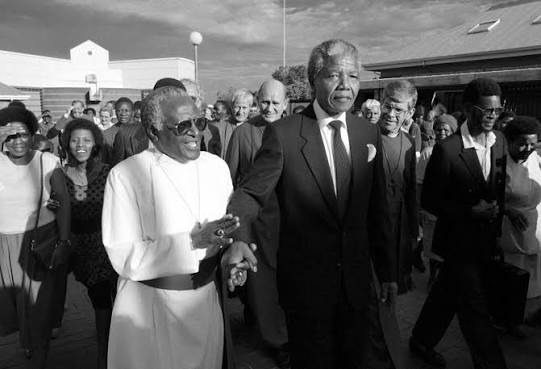
By Sello Hatang: This past Sunday carries with it two profound reminders of what it means to build a nation. We remember the inauguration of Nelson Mandela, a defining moment in our democratic journey, and we celebrate Mother’s Day, a tribute to those whose love, sacrifice, and endurance continue to hold families and societies together. One moment gave birth to a democratic South Africa. The other honours those who give birth to hope itself. At first glance, these may appear to be unrelated commemorations. Yet at their heart lies a common thread: nurture. Nurture is one of the most underrated forms of leadership. It does not always announce itself loudly. It rarely seeks applause. It works quietly, patiently, often behind the scenes. But wi...
Word of the Week: Justice
Opinion

Word of the Week: Justice

By Sello Hatang: Justice is a word we use often, but live out too rarely. It rolls easily off the tongue in speeches, headlines, and debates, yet demands far more of us in practice than we are sometimes willing to give. As I was preparing to host Advocate Muzi Sikhakhane, I was reminded that justice is not only what happens in courtrooms, in legal arguments, or in the finality of a judge’s ruling. It is what happens long before that. It lives in our everyday encounters. In how we listen. In how we treat others. In how we acknowledge truth, even when it unsettles us. Justice is not merely a legal outcome; it is a moral posture, a way of being in the world. Too often, we reduce justice to institutions, as if it exists only in buildings marked...
Counter-Revolutionary Strategy and Alliance Stability: 2026 Local Government Elections, 2027 ANC National Conference, and 2029 National Elections
Opinion

Counter-Revolutionary Strategy and Alliance Stability: 2026 Local Government Elections, 2027 ANC National Conference, and 2029 National Elections

By George Tsibani: An observation of local politics suggests that the principal threat to South Africa’s incomplete National Democratic Revolution (NDR) is twofold: external substitution and internal fragmentation. The substitution strategy seeks to replace the African National Congress (ANC) with emergent black political parties characterised by ideological incoherence and organisational ephemerality (ANC 2012: 7). The fragmentation strategy cultivates chaos within the ANC by privileging parochial and self-interested agendas. This dynamic is captured by the isiXhosa proverb sizelelwe yinja endlini, loosely translated as “we have fed the dog inside the house”, denoting betrayal from within (Nyembezi 1992: 84). The proverb finds resonanc...
On the Two-Stage Theory: Synthesising Piaget, Marxist-Leninism, and the Imperative of the NDR in Post-Colonial Sub-Saharan Africa
Opinion

On the Two-Stage Theory: Synthesising Piaget, Marxist-Leninism, and the Imperative of the NDR in Post-Colonial Sub-Saharan Africa

By George Tsibani: I advance the following proposition with Leninist clarity: just as human development proceeds through distinct, irreversible stages, so too does a national revolution. To conflate or postpone stages in either domain is to court deformation and arrest. In developmental psychology, Jean Piaget’s theory demonstrates that biological and cognitive growth unfold through qualitatively distinct stages: sensorimotor, pre-operational, concrete operational, and formal operational. In the cultural life of the human race, I recognise these transitions as rites of passage to womanhood or manhood. A child cannot be made an adult by decree; the physiological and psychological transition must be traversed. To traverse here means to pass acros...
Land, migration, and power: Unravelling the South African property puzzle
Opinion

Land, migration, and power: Unravelling the South African property puzzle

By Phindile Ntliziywana: South Africa’s land and property landscape is a battleground where history, race, and economic disparity collide in a volatile mix. The legacy of apartheid’s land dispossession still lingers, but today, new dynamics threaten to rewrite the property map – dynamics that some argue favour certain groups over others, fuelling tensions and deepening divides. Historical dispossession and the new Land Grabs For centuries, white South Africans – privileged and often protected by the state – ruthlessly accumulated land, locking out black South Africans from owning the very soil that was their ancestral homeland. Post-apartheid land reforms seek to rectify this, but the process remains fraught with controversy, often accused o...
China’s ready to share its high-level opening up, opportunities and dividends with the world and South Africa in particular, says Consul-General
Opinion

China’s ready to share its high-level opening up, opportunities and dividends with the world and South Africa in particular, says Consul-General

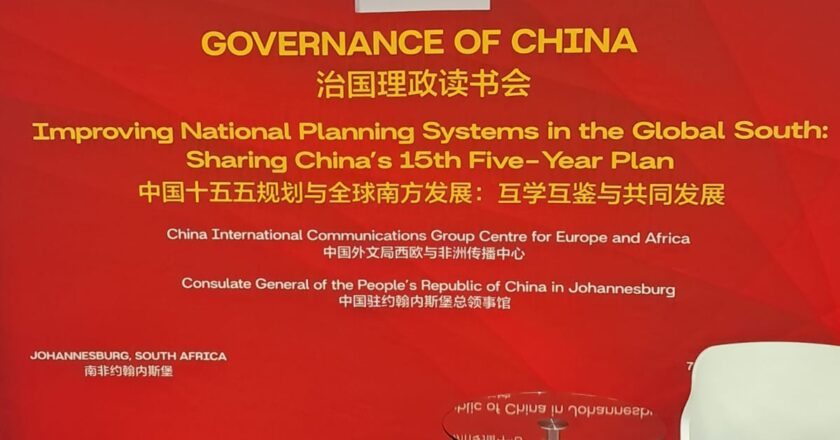
By Thobile Jiwulane: Chinese Consul-General in Johannesburg, Pan Qingjiang, at Wits University. (Image: Supplied by the Consular-General) China's Consul General in Johannesburg, Pan Qingjiang, says China is committed to expanding high-level opening-up, and providing new opportunities to and sharing more dividends with the world, including South Africa, through its new development.   Delivering a speech at a seminar titled the "Reflections Seminar:  The Journey of Discovery in China” held at Wits University on April 15, 2026, Pan said China adopts a people-centred approach in dealing with its external relations. China will continue to strive together with South Africa to translate our close relationship and pragmatic cooperation into more tangible and real benefits to o...